

Today’s episode is brought to you by Parafin - the leading provider of ready-to-launch financial products that help your merchants grow. Check out what Parafin can do to drive revenue, retention, and TAM at your business!
Alright, let’s dive in…
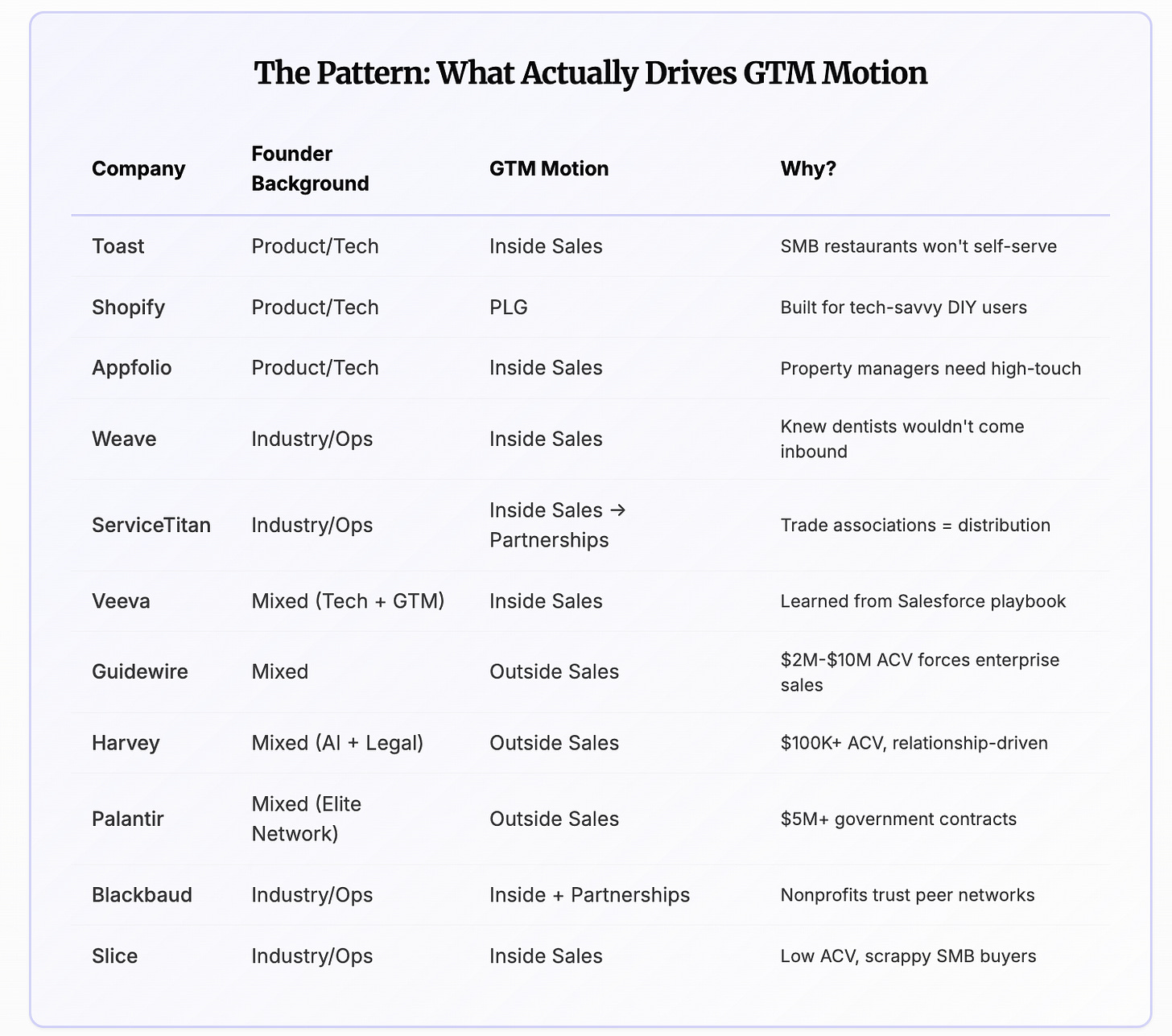
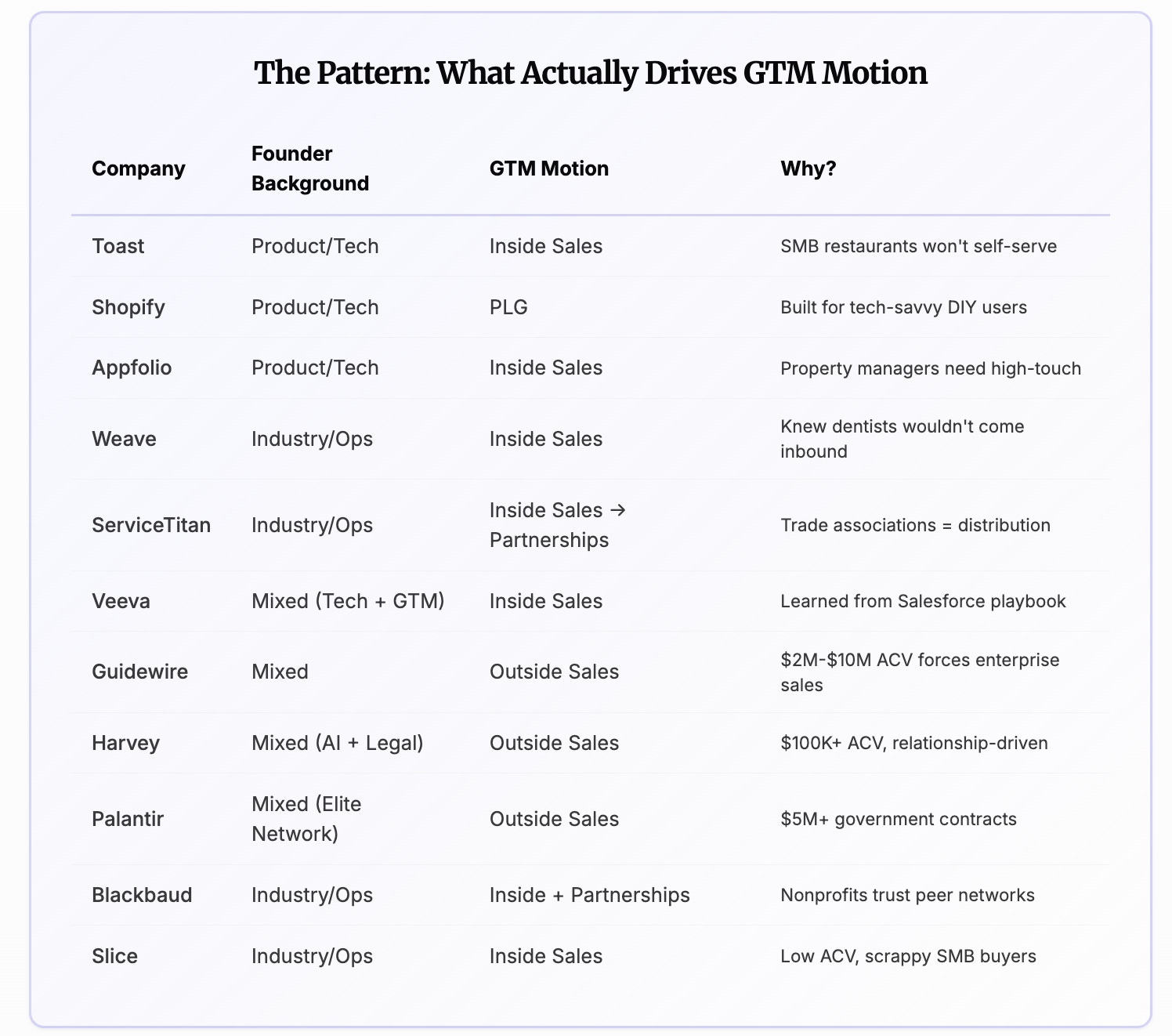
I broke down what every leading Vertical Software companies GTM motions and how that evolved over time. Check it out here. Interesting graphic summarizing it here:
Brain Co raised $30m Series A. Led by Elad Gil + a who’s who of AI angels. An AI infrastructure + apps company aimed at helping large institutions (governments, healthcare, energy, etc.) deploy AI solutions. Building “living” AI apps that automatically upgrade when newer model capabilities emerge. Some use cases include automating permitting, optimizing energy, streamlining hospital workflows, handling complex customer interactions.
Doctronic raised $20m Series A
Raised $20m Series A led by Lightspeed + USV, Tusk. Building a 24/7 AI “digital doctor” for triage, diagnosis, and treatment with human physician oversight. Combines AI agents, centralized EMR, and licensed doctors for seamless end-to-end care.

Kyle Norton, CRO at Owner.com
You know those revenue leaders who just get it? Kyle Norton is one of them. He is one of the best software sales leaders in vertical SaaS right now.
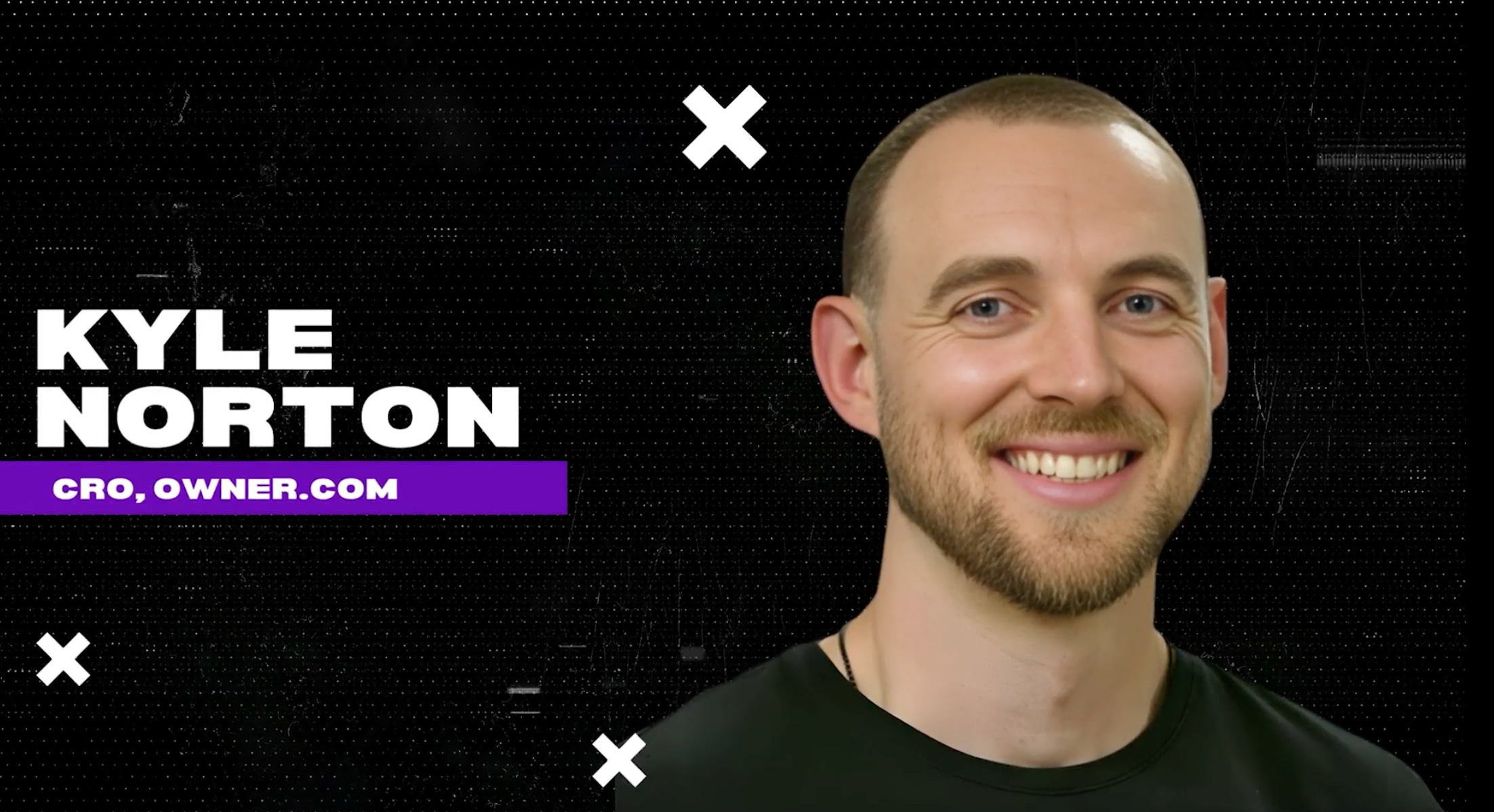
He is currently the CRO at Owner, and has taken them from a few million in ARR to $50M+ in just over three years—while maintaining nearly 2.5x year-over-year growth even at that scale.
Before Owner, Kyle spent a decade in SaaS. He was VP of Sales at League, taking them from zero to $25M ARR in enterprise benefits and healthcare. Then three years at Shopify, where he ran go-to-market for their Point of Sale group and later the entire Canadian market across all products and segments.
Kyle had an amazing run at Shopify. Wasn’t planning on leaving. Had just had his second kid. Timing was terrible to join a startup.
But he used his “Founder Framework” and just saw something he couldn’t turn down…
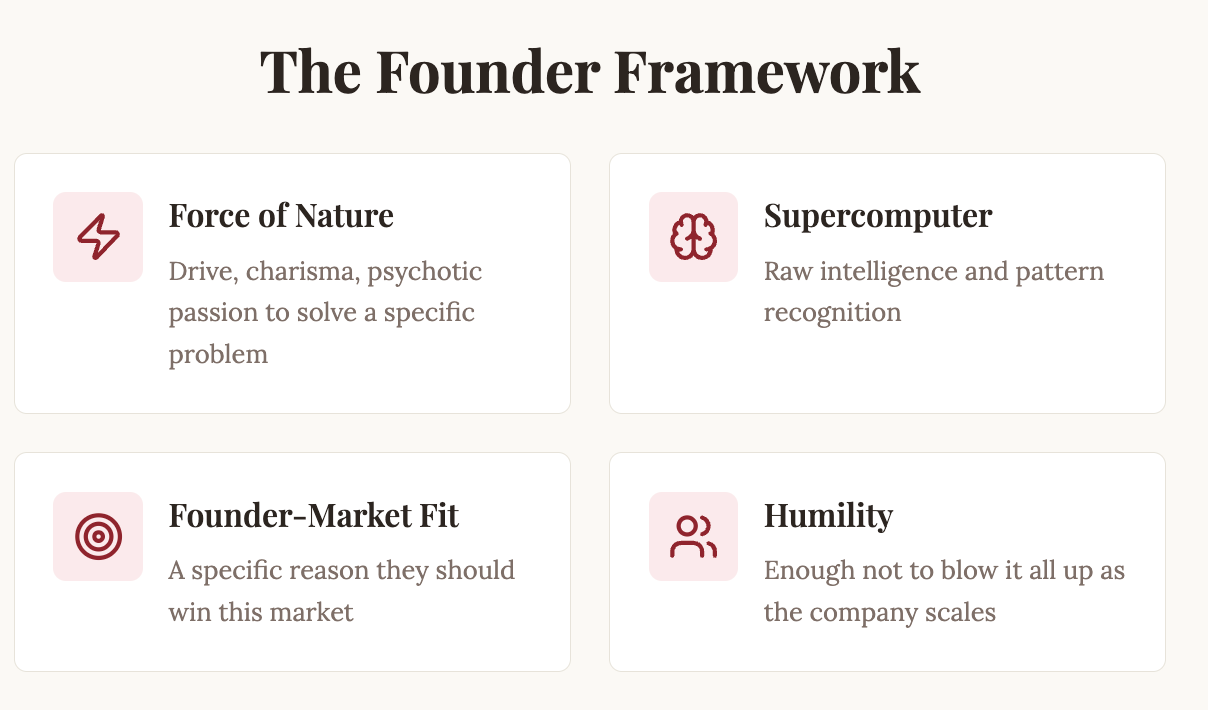
That last one is critical. Kyle’s seen it too many times—companies hit Series B, founder can’t let senior leaders make decisions, can’t take feedback from the board. You can be founder-mode hardcore all the way through Series A. But at Series B, you hire senior people and they quit because they’re frustrated, or you jettison yourself into things without full context and the decision-making isn’t great.
Adam passed all four tests.
Kyle met Adam when he was 22 years old. In their first call, Adam ripped through insightful, precise, well-thought-through questions. Not basics. Really good questions. Kyle suggested a book—Made to Stick, one of his favorites on messaging.
Normally when Kyle suggests a book to a founder, they probably don’t read it.
18 hours later, Adam texted him. “Hey, I read that book.”
And he had sophisticated questions. Not beginner questions.
Kyle told me: “I was like, man, these aren’t like beginner questions. This guy read this book in literally a day and a half—actually like three quarters of a day—and was ripping these questions at me. I was like, whoa. I just... I got onto the next call and it was the first time that I’d been around somebody where I was like, man, I feel sort of intellectually self-conscious around this guy who’s 22 years old and I was 36 at the time.”
He knew. If he didn’t join Owner, he might regret it for the rest of his life.
And that’s why we do these things. We want to be in a power-law outcome situation.

How To Build A Revenue Factory At Your vSaaS
The first step in Kyle’s Revenue Factory is ensuring there is “revenue leader market fit”. Here’s the thing about vertical SaaS, especially in VSMB and very small SMB: you need a very particular type of revenue leader.
You need somebody who’s a systems thinker.
You can be super successful as an enterprise leader without being Mr. Dashboards. You can be an awesome deal jockey, know how to recruit great people, tell a good story, run a good pipeline review meeting.
Kyle’s competitive advantage in his sales leadership career has always been solving for the machine and understanding: this is just volume times conversion rate equals output. It’s a manufacturing line.
So you break it all down and you solve problems stage by stage.
Here’s exactly how it works:
Step 1: Instrument Everything
You can take your entire funnel and break it down stage by stage. Not just big stages like lead → opportunity → closed won. But micro stages.
This is how Owner runs their Monthly Business Review: they go through every step of the customer journey. And it all has to be instrumented.
Do you have good automations that show you when meetings have been booked and then completed? Or booked and rescheduled? Or booked and not completed?
Do you have good sentiment and disposition infrastructure? When people call and the person doesn’t pick up, do you have an easy way for them to say: connected or not connected, gatekeeper or decision maker, and then the outcomes that waterfall below it?
It’s all about the boring work. Kyle really enjoys that stuff. The really boring work of: have you first instrumented your customer journey so you know what’s happening in there?
Oftentimes you’re making bad decisions because you haven’t been insistent with your sales reps to give you the right feedback. Do we have a meeting show problem or do we have a meeting book problem? Often people are just operating without knowing that.
Owner uses Momentum, an AI tool that transforms call transcripts and fills in your CRM for you. They use Salesforce as their CRM, SalesLoft on top of it for all the emails and calls and sentiments and dispositions. Then everything gets hoovered into Snowflake, and they do the work in Sigma.
Here’s the key: Even when Owner was $3-4M ARR, Kyle hired a very senior rev ops leader. Steve, his VP of Rev Ops, has worked with Kyle for almost a decade. They made these investments early.
Step 2: Identify the Problems
Once you have the data, can you look at this funnel and accurately understand where is the most volume with the worst conversion rates? Where can you get the most ROI for your effort?
Kyle uses a modified framework from Annie Duke:
Possibilities: What can we improve?
Probability: What’s the likelihood those possibilities actually work?
Payoff: What’s the payoff if those things work?
Perspiration: How much effort does it take?
Look at your funnel and try to avoid incrementality. If you have all the data, you should be able to know where the biggest areas of leverage are.
In their MBR yesterday, Kyle’s feedback was: “What are the biggest areas of leverage? Ignore all the month-to-month noise. I get this is affected and I get that’s affected. But like, what are the one or two things that if we go fix, drastically move us forward?”
Step 3: Execute Maniacally
Then you have to be maniacal about your project management execution.
Kyle admits he’s personally not very good at this. He needs people around him. He has a great enablement leader, a great rev ops leader, an awesome data team, and other people in the organization who are much better at the project execution.
This comes back to humility. Kyle’s good at seeing the answer and getting to root cause. He’s creative when it comes to problem solving. But he doesn’t like to manage the project in Asana or Notion.
You need to run this process every month:
Do we have the data first? (You’re always working on data foundations)
Can we identify the problems?
Can we understand our highest impact, highest probability problems to go solve?
Can we rally the resources around that thing to solve it?
The Secret Weapon: Change Management
Here’s something Kyle hasn’t talked about publicly much: One of the big things you can do to unlock pace, speed, and growth is change management.
If you can get really good at change management so you’re not overwhelming your team with chaos, then you can get better faster than your competitors. And that is a compounding advantage over time.
You’ve got to have a structure and a process. You have to be able to have a playbook for how you want to deploy things.
Owner has a traffic light model (Kyle published it on his Substack and talked about it at his SaaStr talk in 2024):
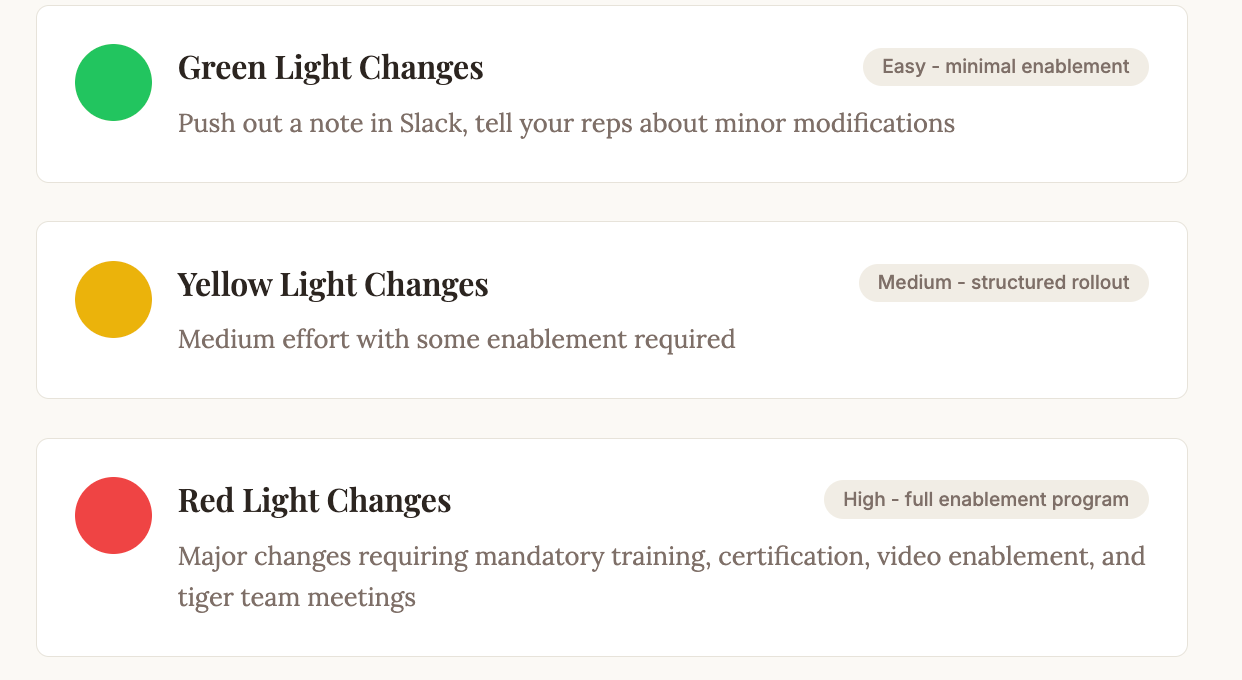
That’s all spelled out in the traffic light model. And they bake it into the operating system.
When you have a project in Owner’s system and you pick the scope of project, it will auto-generate at the end the enablement projects that show up in the enablement Notion project database.
It’s systems engineering. What are the systems and structures you can put around yourself to nudge yourself towards the things you want to do?
James Clear, Atomic Habits. What is the digital environment you surround yourself with? What are the automations and workflows you have in place to nudge yourself towards doing the right things?
Hiring for High-Velocity vSaaS
Owner took a slightly counterintuitive approach to hiring. You’ve got to know the game you’re playing.
They were playing a go-big-or-go-home game. Traditional venture-backed, power-law outcome game. They were going to spend a bunch of money to grow as fast as they could and absolutely win the market.
Kyle’s approach: Pay at the top end of the SMB market and go hire President’s Club performers from a bunch of adjacent companies.
Kyle had a unique advantage. He has a meaningful following on LinkedIn. He does a lot of content. He has a lot of brand equity, especially in the Toronto sales community.
So when he joined Owner, it was a pretty significant validation. When he reached out to sales reps, he could go to a President’s Club performer from a mediocre vSaaS company that was growing quickly at some point but maybe has slowed down—a stage or two ahead of Owner—and just pluck off top reps.
There are companies Kyle’s hired 11 people from. He feels sort of bad because it’s not an awesome situation for them. But there are these hotspots where they hired one or two people from one company, and all of a sudden they have five people from that company because they tell their friends.
“Oh, we can actually hit quotas here. Like, dude, I’m making way more than my OTE and the OTE is good.”
Kyle built a very seller-friendly environment with high comp and friendly OTEs. He was on a bunch of demos every end of month helping the team get the job done.
How To Build YOUR vSaaS Revenue Factory
Alright, let’s break down Kyle’s playbook into actionable steps you can deploy in your business.
1. Invest in Rev Ops and Data Earlier Than Feels Comfortable
Most founders wait until they’re $10M+ ARR to hire serious rev ops and data talent. Kyle hired a very senior VP of Rev Ops at $3-4M ARR.
Why? Because you can’t optimize what you can’t measure. And in high-velocity vSaaS, measurement is your competitive advantage.
Action item: If you’re doing $2M+ ARR in a high-velocity motion, hire a senior rev ops person. Not a junior analyst. Someone who’s done it before. Someone who can build the infrastructure to capture data at every micro-stage of your funnel.
2. Instrument the Entire Customer Journey
Don’t just track “lead → opp → closed won.” Break it down into micro-stages:
Cold call → connected or not connected?
Connected → gatekeeper or decision maker?
Meeting booked → completed, rescheduled, or no-show?
Demo completed → next steps scheduled or not?
The boring work matters. Kyle really enjoys this stuff. Most founders don’t. But this is where you find leverage.
Action item: Audit your funnel right now. What micro-stage conversions are you not tracking? Pick the three most important ones and start capturing that data this week.
3. Use the Possibilities-Probability-Payoff-Perspiration Framework
When you’re looking at what to fix, use Annie Duke’s framework (modified):
Possibilities: What could we improve?
Probability: What’s likely to actually work?
Payoff: What’s the impact if it works?
Perspiration: How much effort does it take?
Look for high payoff, high probability, low perspiration opportunities. Ignore the month-to-month noise.
Action item: In your next team meeting, list out all the possibilities for improvement. Score each one on probability (1-10), payoff (1-10), and perspiration (1-10, where 10 is highest effort). Focus on the highest probability × payoff ÷ perspiration scores.
4. Build a Change Management System
Kyle’s traffic light model is genius in its simplicity:
Green light changes: Slack note
Yellow light changes: Some enablement
Red light changes: Full training program with certification, reinforcement, and tiger team
Bake this into your operating system. When someone proposes a change, they have to identify which color it is. That triggers the right level of enablement automatically.
Action item: Create your own traffic light model this week. Define what qualifies as green, yellow, and red. Share it with your team. Use it for the next change you deploy.
5. Run a Real Monthly Business Review
Not a “let’s look at the revenue number” meeting. A real MBR where you:
Go through every stage of the funnel
Identify the 1-2 highest leverage problems
Rally resources to solve those problems
Review progress on last month’s initiatives
Kyle’s VP of Data spends a full week pulling data for MBR. That’s the level of rigor required.
Action item: Block a 2-hour MBR on your calendar for next month. Assign someone to pull data on every funnel stage. Go deep on where you’re bleeding opportunity.
6. Hire for Systems Thinking, Not Just Sales Acumen
In vertical SaaS SMB, the operational rigor and data centricity is more important than sales acumen.
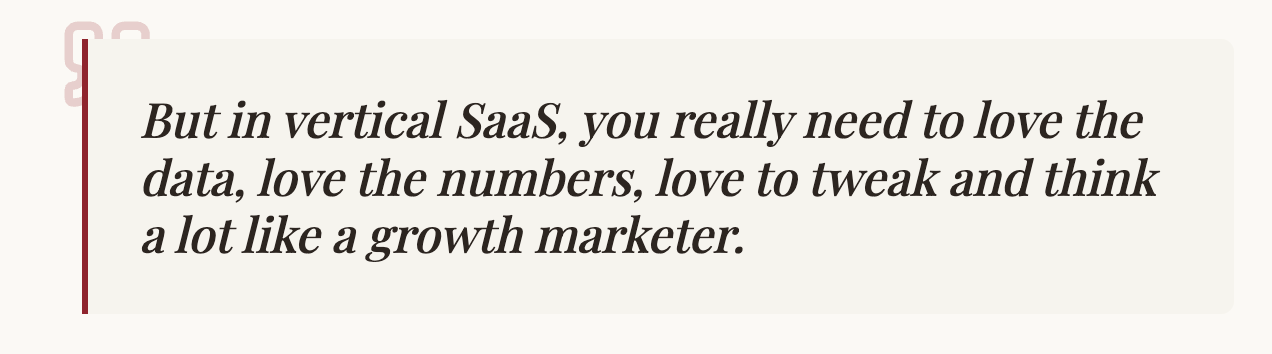
You need somebody who loves the data, loves the numbers, loves to tweak and think like a growth marketer. The sales acumen is important—you need to teach great craft to win deals—but you really need to understand how the machine works.
Action item: When you’re hiring your next revenue leader, ask them: “Walk me through how you’ve instrumented a funnel before. What BI tools have you used? How do you identify where to focus?” If they can’t get granular, they’re not the right fit for high-velocity vSaaS.
7. Build a Seller-Friendly Environment
Kyle pays at the top end of the SMB market. He sets achievable quotas (3:1 early stage, 5:1 at scale). He jumps on demos at end of month to help close deals.
Why? Because word-of-mouth recruiting is the best recruiting.
When your reps tell their friends “Dude, I’m making way more than my OTE and the OTE is already good,” you don’t have to recruit anymore. They recruit for you.
Action item: Look at your quota attainment rate. If less than 60% of reps are hitting quota, your quotas are wrong. Adjust them. Make your environment seller-friendly. Watch what happens to retention and referral hiring.
8. Know What Game You’re Playing
Kyle knew Owner was playing a go-big-or-go-home, venture-backed, power-law game. So he optimized for speed and market dominance, not efficiency.
If you’re bootstrapping or “boot-scaling,” your playbook will be different. Know your game. Optimize for the outcome you’re actually playing for.
Action item: Write down in one sentence what game you’re playing. Share it with your leadership team. Make sure everyone agrees. Then make sure every major decision aligns with that game.
In summary…
Kyle Norton is maniacal about systems and data in a way that 99.9% of sales leaders aren’t. He doesn’t just ask “how many emails did we send today?” He asks: What’s the conversion rate from cold call to connected call? What’s the show rate on booked meetings? Where in the funnel are we bleeding the most opportunity?
And then he builds systems—people, processes, tools—to fix it.
If you’re building a high-velocity vertical SaaS business, this is the playbook.
Have a product or service that would be great for our audience of vertical SaaS founders/operators/investors? Reply to this email or shoot us a note at ls@lukesophinos.com


