

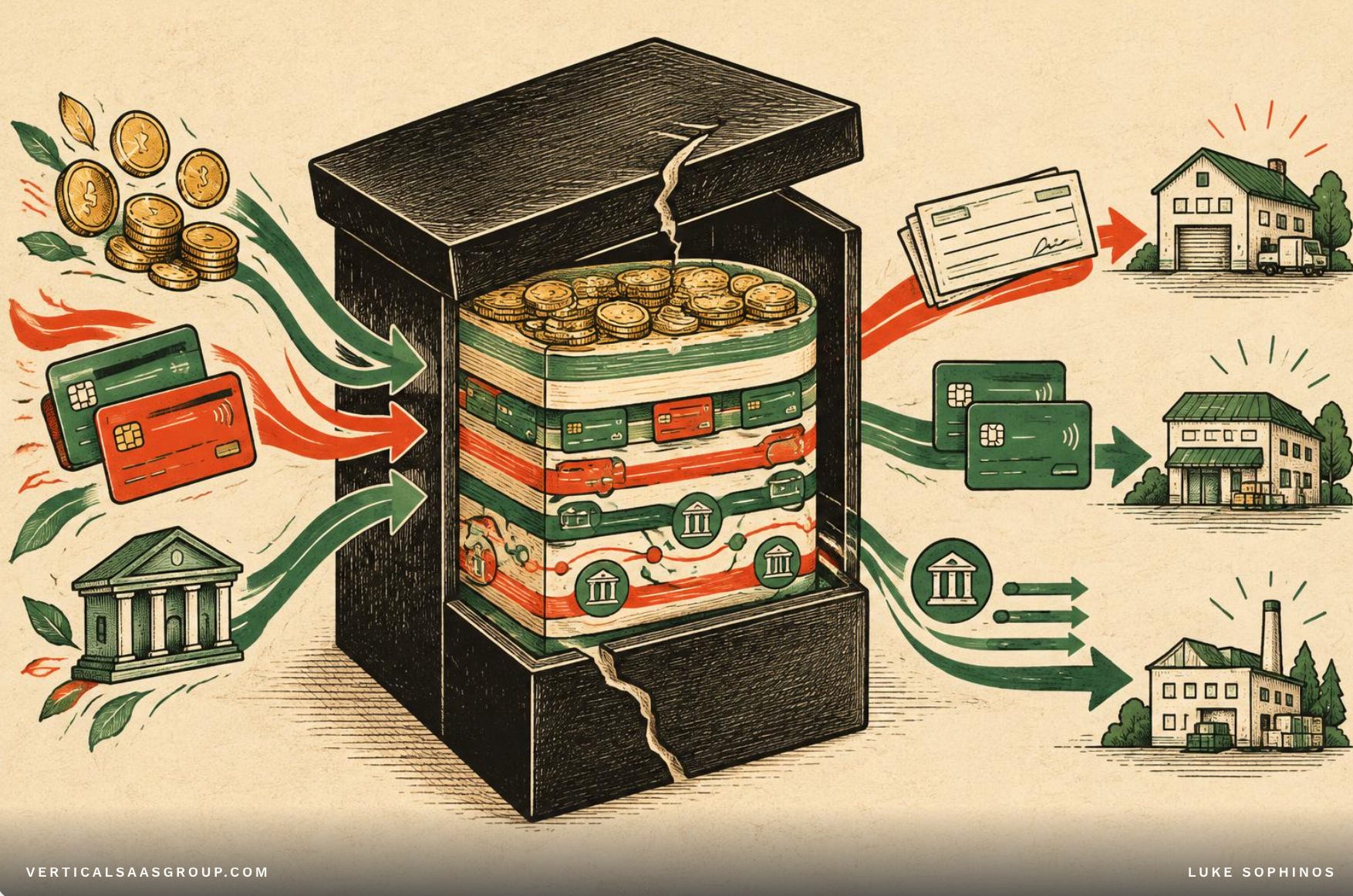
Let’s open up the
Payments black box.
A founder told me a few weeks ago he was done with the payments BS. He couldn’t read the report his payments partner sent him, he felt like payments is just a commodity, and was just going to open up a bidding war from 10+ embedded payments partners and take the best rate he could get.
I hear some version of that story every month.
Payments is still a black box for most vertical software founders…
So I brought on two people who have spent their careers inside that box: Jo Phillips and William Corbera, co-founders and co-CEOs of Payabli. They work with a ton of vertical software companies on embedded finance — money in, money out — and they were in the room when ServiceTitan figured out payments.
We covered what a good take rate actually looks like, why money out is the biggest thing founders leave on the table, and what happens when AI agents start calling vendors and paying bills.
This Weeks Vertical Titans:
Jo Phillips & William Corbera (Co-Founders of Payabli)
Will has been in the industry about twenty-five years. Before Payabli he co-founded a property payments platform with his brother, bootstrapped it for about sixteen years, and was one of the first PayFacs in the industry. “Payments is very, very hard,” he says, and that business was where he learned what became Payabli.
Jo is a serial go-to-market executive at hyper-growth startups; his last stop was ServiceTitan. They had just raised a large Series B, their third-party processor was butchering the customer experience, and they weren’t monetizing well. Jo brought in Will, who was instrumental in architecting what became ServiceTitan Payments — in Jo’s words, the darling child of vertical SaaS proving software could be the distribution for financial services.
The catch: ServiceTitan had to throw a lot of time, money, and bodies at cobbling together a mosaic of infrastructure partners. Payabli exists so the next platforms don’t have to.
Bootstrapped, no product — For the first two years they resold legacy providers’ APIs. Their first sales deck had ServiceTitan, Toast, and Mindbody logos — not their customers, just proof the playbook worked.
Residuals into IP — They took the residuals they earned as an ISO and put them into their own technology.
Full stack — Today Payabli runs its own funding, settlement, risk, and underwriting engines — “not a wrapper around other APIs or gateways.”
Platforms only — Slack channels and direct phone lines for partners, and invisible to their merchants so the platform’s payments brand comes first.
Their thesis from day one, in Will’s words: these software companies are payment companies. Everything below is about how to act like one.
Jo & Will’s 15 Playbooks:
Fifteen playbooks that smash open the payments black box…
01. If payments is a feature, you’re shopping for price. If it’s a business unit, you’re shopping for a partner.
Jo is blunt about it: if you just want to transact, Payabli isn’t for you. If you want payments to be a core part of your business model, you have to understand the business model of payments first.
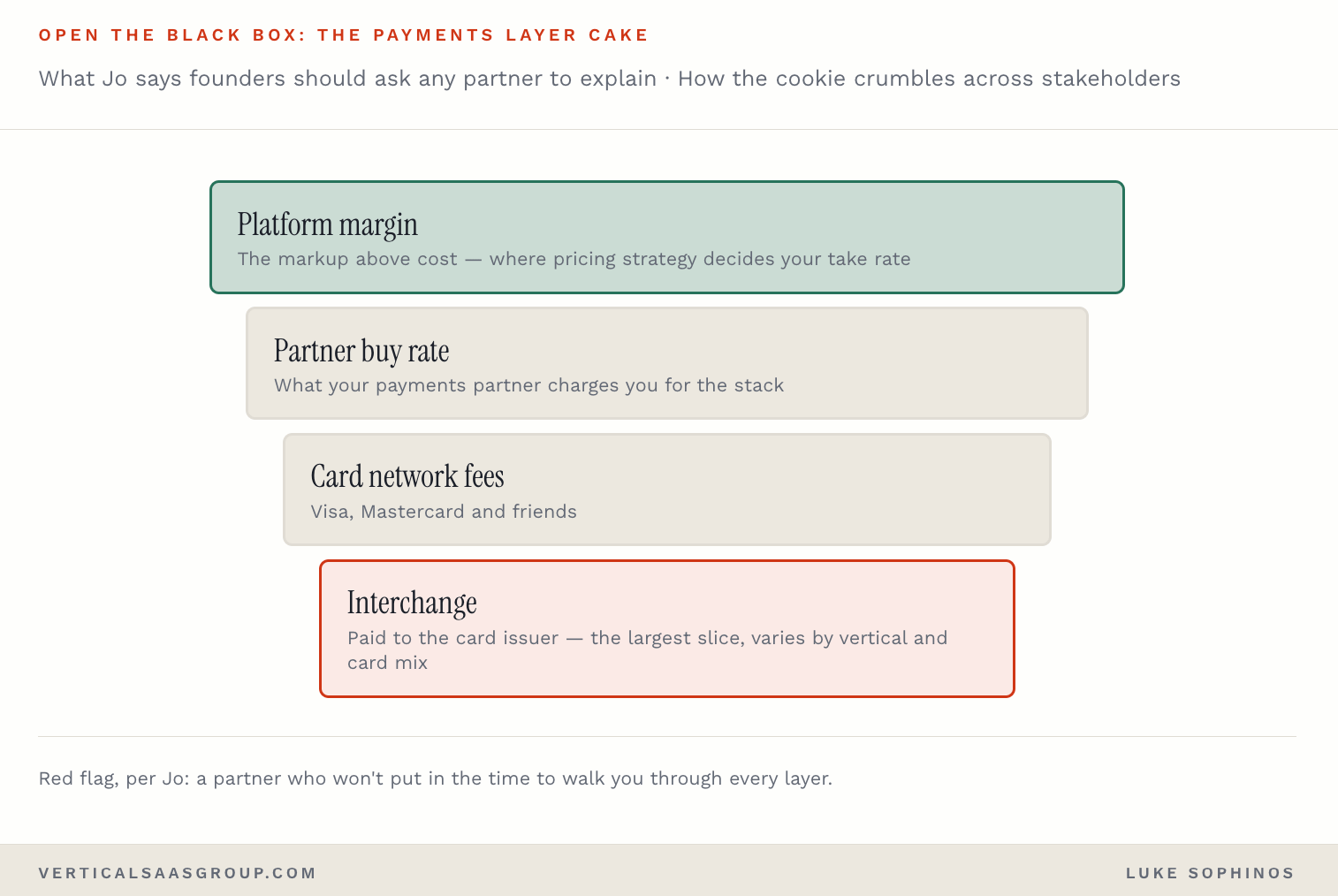
02. Make your partner explain the layer cake.
How much is interchange, what do network fees look like, what’s the buy rate, and how does the cookie crumble across every stakeholder? “If someone’s not willing to put in time to advise you on that, then that should be a red flag.”
03. Don’t undercut. Charge a premium for vertical value.
One of the biggest mistakes Jo sees is founders trying to beat Stripe at 2.8% and 20 cents. That’s a strategy — but if you’re building bespoke, vertical-specific financial experiences, you should command a premium. Payabli has customers who started discounted, built value, and now charge in excess of 3.5%. A lot of it is psychological.
04. Know the benchmark: 25–30 bps is bad, 50–80 is healthy.
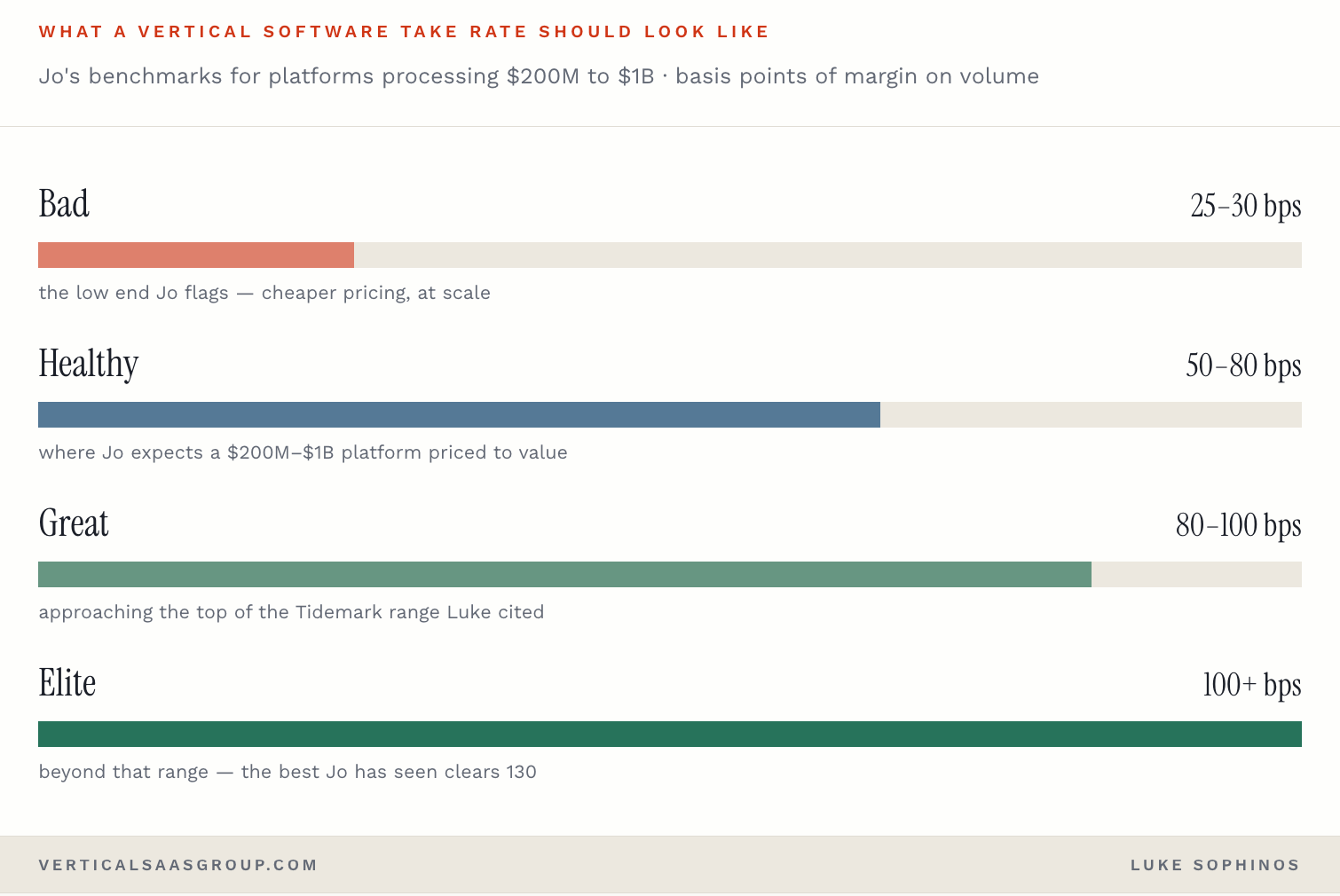
Asked about Tidemark’s 30-to-110 bps range, Jo called it fair. For a platform doing $200M to $1B in volume and pricing to value, he’d expect in excess of 50 bps; 25–30 is the low end. The best program Jo has seen runs over 130 bps of margin.
05. Your vertical sets your ceiling.
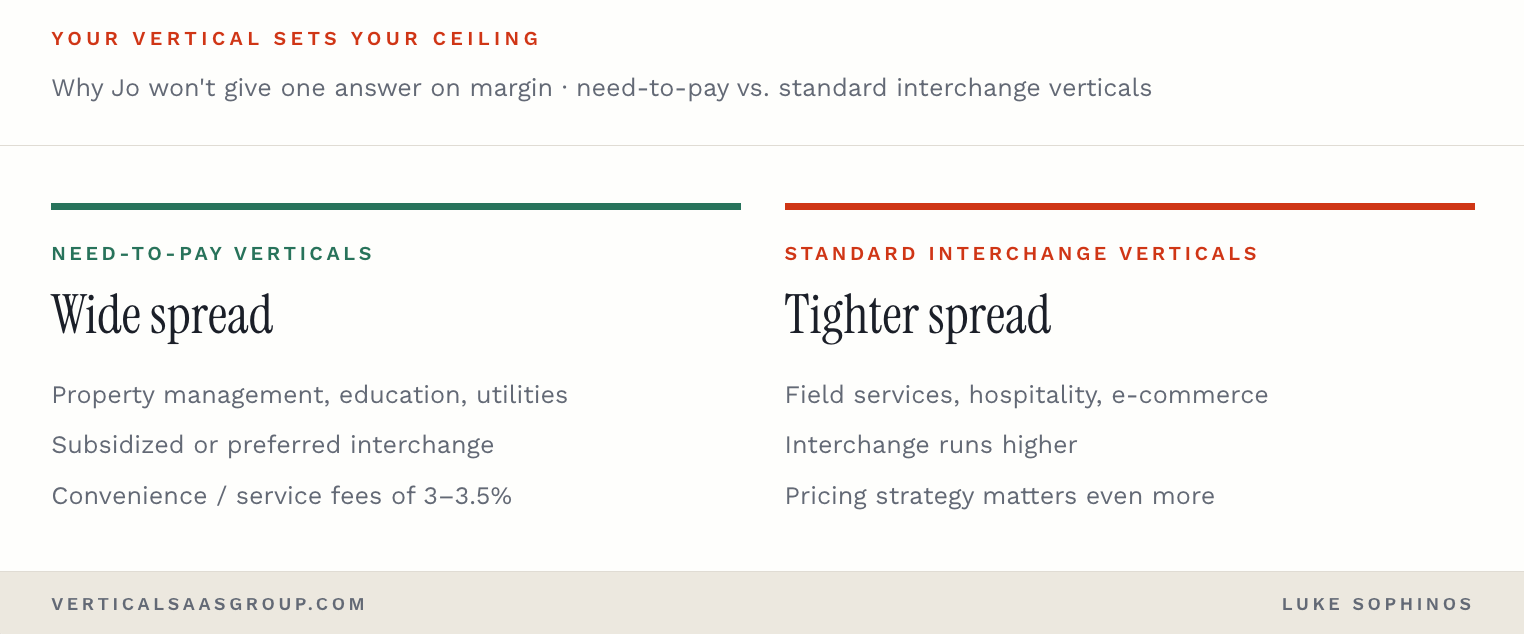
Need-to-pay verticals — property management, education, utilities — get subsidized or preferred interchange and often run 3–3.5% convenience or service fees, so the spread is wide. Field services, hospitality, and e-commerce face higher interchange. There’s no single right number without the vertical.
06. Demand reporting you can actually audit.
At ServiceTitan, residuals arrived as a big quarterly file they couldn’t audit; it looked like good revenue but wasn’t, relative to volume. Payabli pairs detailed residual reports with FinOps meetings — “we saw a bunch of downgrades this month” — and puts residuals inside its Amigo AI suite so partners can query them directly.
07. Unify the three Ps
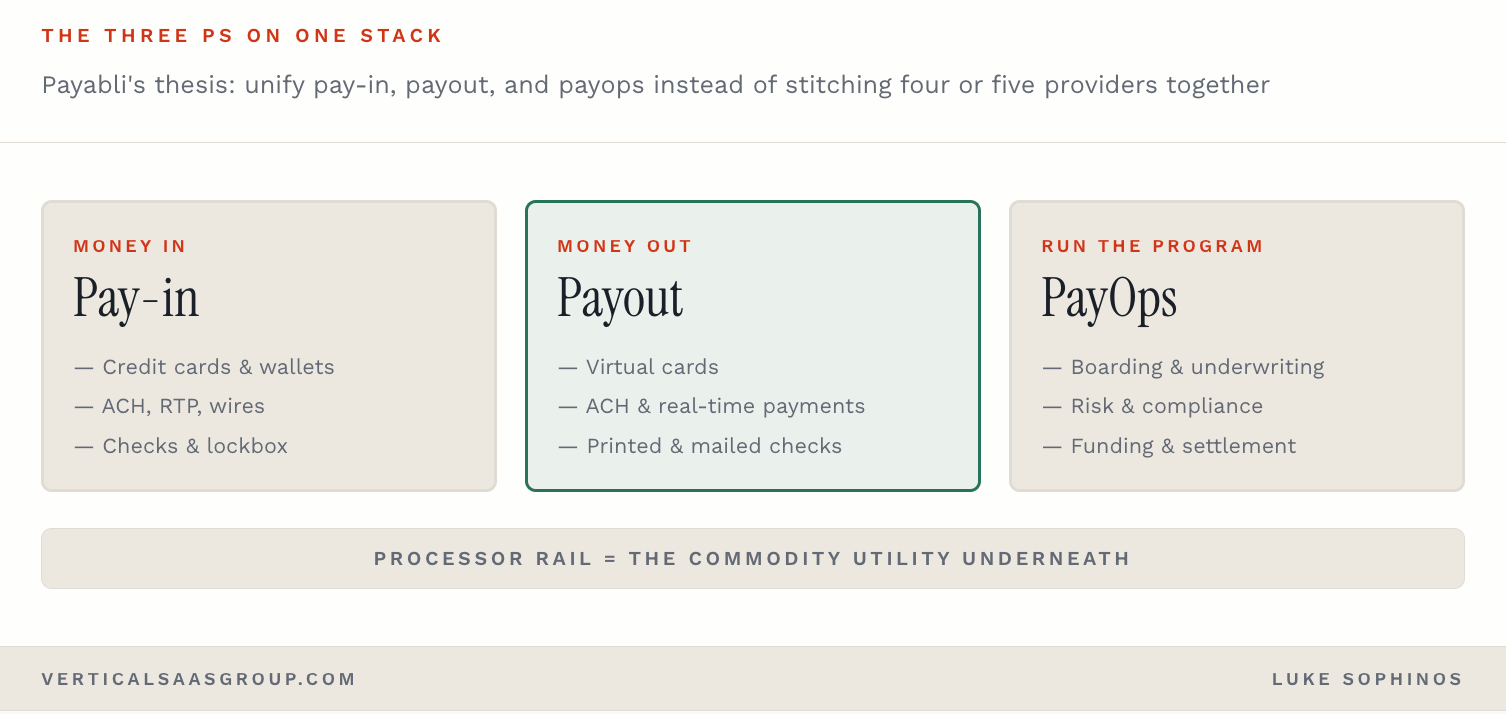
Pay-in is fragmented: cards, wallets, ACH, RTP, wires, checks, lockbox. Payout has the same problem in reverse. Payabli’s vision was pay-in, payout, and payops on one stack, embeddable as easily as pay-in. The processor rail underneath is the commodity utility; the value is everything above it.
08. On money out, you become the issuer.
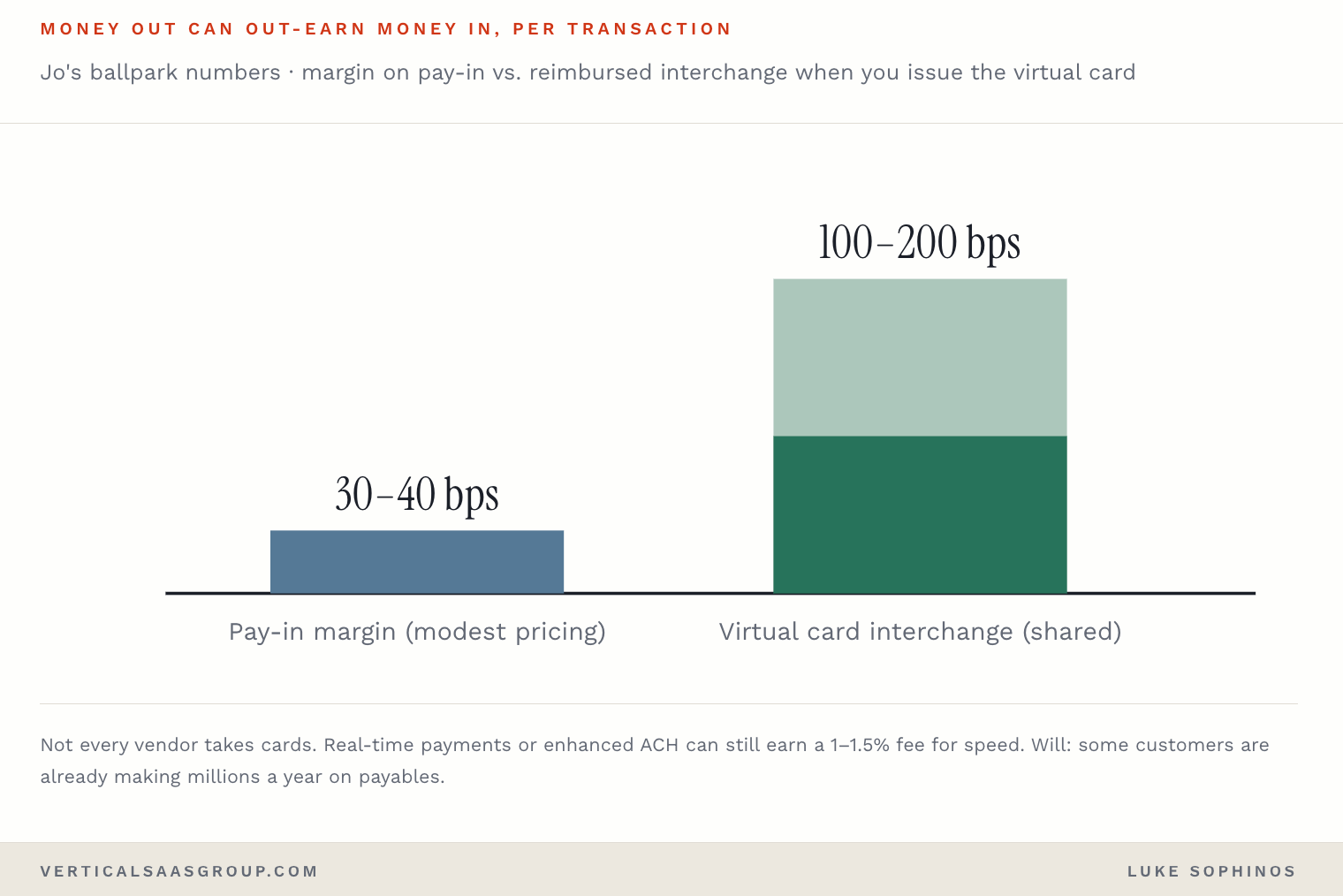
On money in you capture the markup above interchange. On money out, when you issue the virtual card, the lion’s share of interchange is reimbursed back — and shared with the platform. Interchange there generally runs 100 to 200 bps versus maybe 30–40 bps on modestly priced pay-in.
09. Monetize every modality, not just cards.
Not every vendor will take a card. Real-time payments or enhanced ACH can carry a 1–1.5% fee for faster payment. Will notes ACH works especially well where there’s a trusted merchant–supplier relationship — and that once a payout is gone, it’s gone, so vendor vetting and enrichment matter.
10. Build your own embedded Bill.com.
Partners are building invoice ingestion and approval workflows in-house — thresholds, multiple approvers — with Payabli as the execution engine. They monetize the payment and charge for the SaaS automation on top. Jo argues the retention and NRR value of embedded AP is huge on its own.
11. Only go deep on AP where AP is the business.
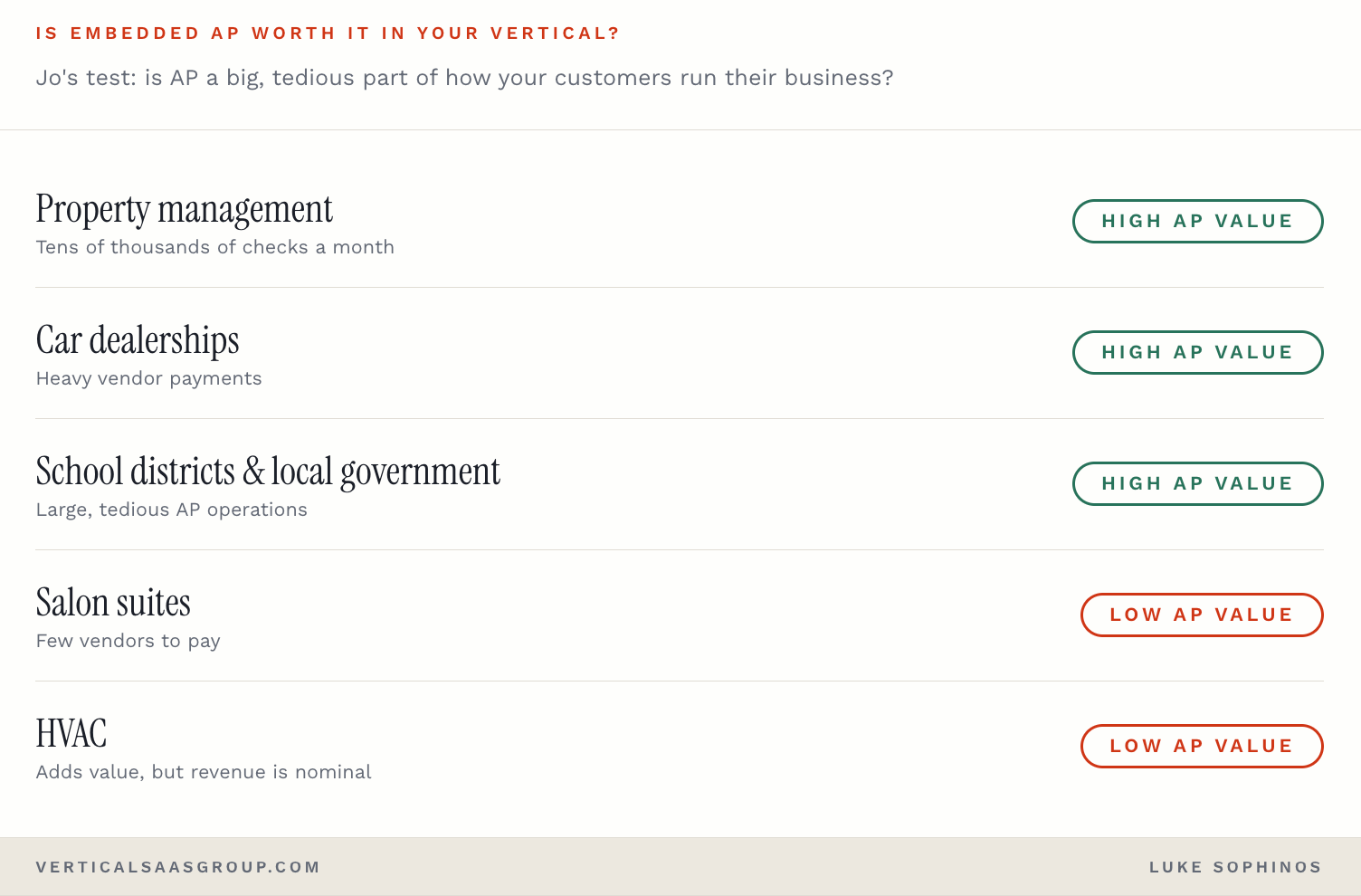
Property managers sending tens of thousands of checks a month, car dealerships, school districts, local governments: real value. A salon suite platform or an HVAC company will add value but the revenue opportunity is nominal. A good partner should tell you which one you are.
12. Nobody has had their Toast S1 moment on money out — yet.
Toast’s and ServiceTitan’s S-1s flipped venture on vertical software. Luke asked who will do the same for money out. Will wouldn’t name customers but said it’s material: some are making millions a year on payables, and in many verticals money-out volume roughly equals money-in volume.
13. Build for the robotic community, not just developers.
Payabli is API-first, with embeddable components, hosted solutions, and MCPs on top. The goal is for a platform to find Payabli inside Claude or wherever it’s building, embed the components with Payabli’s integration skills, and start processing within 48 hours. Agents recommending the stack to vibe-coders? “That’s the vision.”
14. Agentic AP is the first real B2B agent use case.
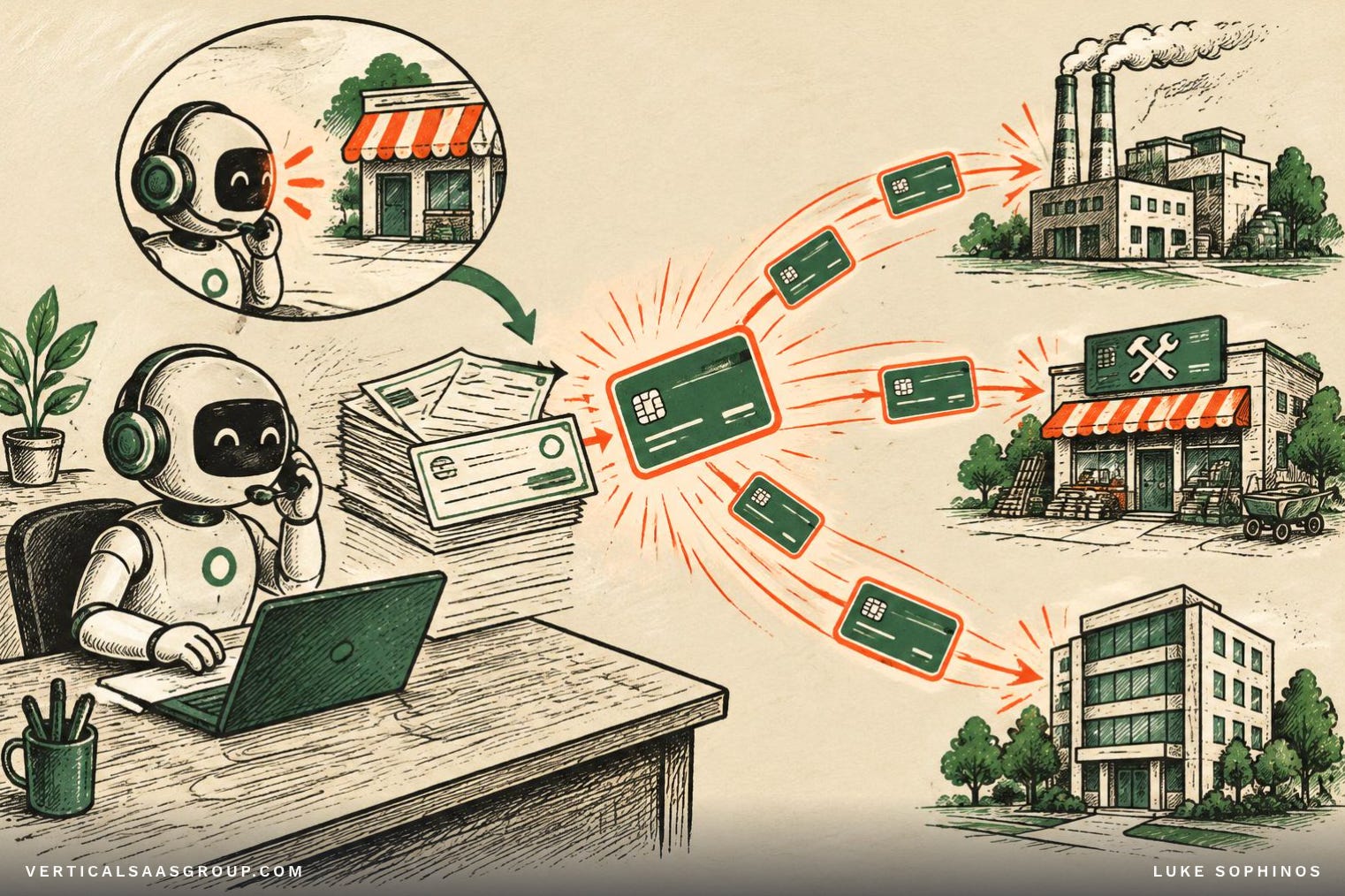
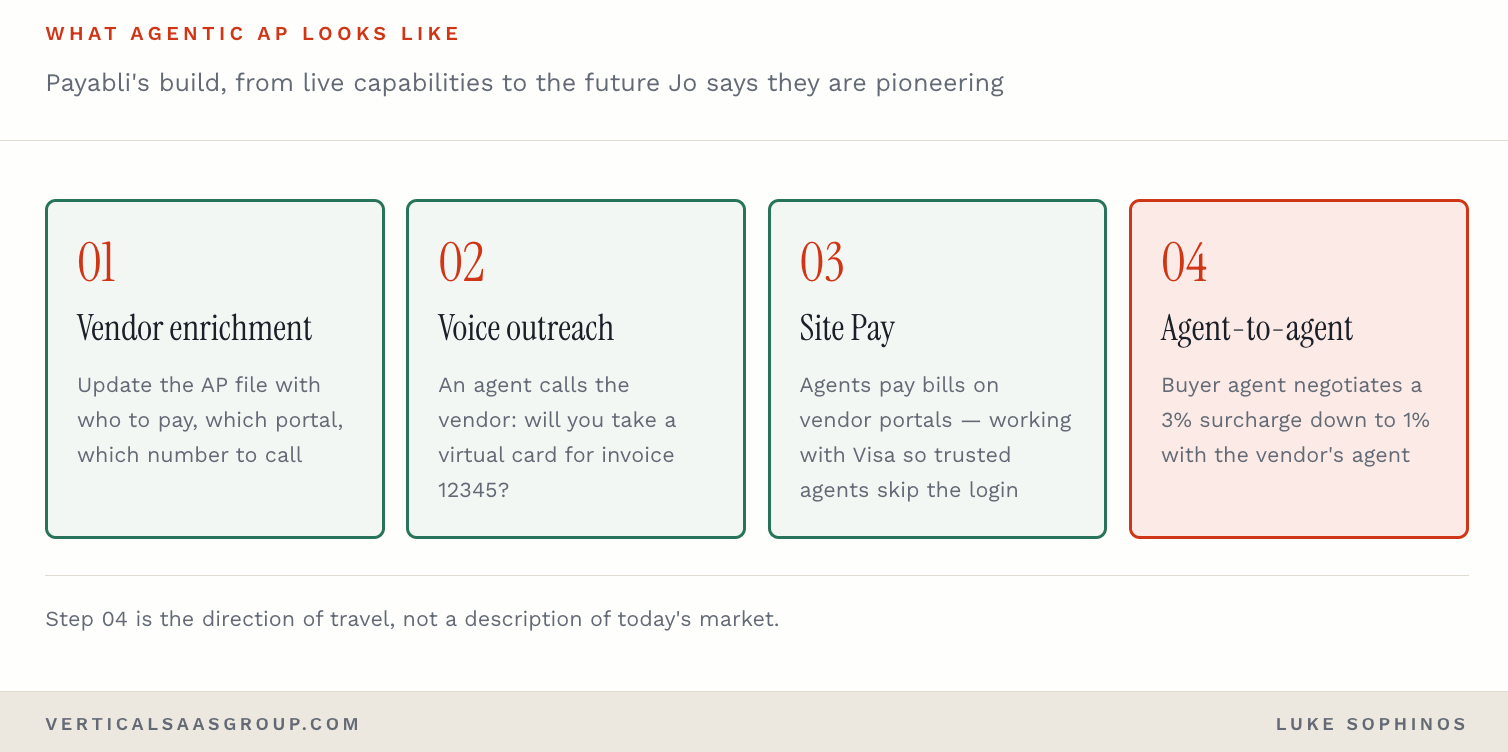
Legacy AP players hire legions of call-center humans for vendor enablement. Payabli runs agentic vendor enrichment, a voice agent that calls vendors to ask if they’ll take a virtual card, and Site Pay — paying on vendor portals, with work alongside Visa so trusted agents can skip the login. Next: a buyer agent talking a vendor agent from a 3% surcharge down to 1%.
15. Headless is coming — offer it before customers ask.
Luke’s survey for the summit found roughly 70–80% of vertical software founders refuse to surrender the UI. Payabli released a full MCP a few weeks ago based on customer demand, and Jo says partners are starting to go headless themselves. Will’s take: give partners choice — API, components, hosted, or MCP — based on where they are in their crawl-walk-run journey.
And per usual, we wrapped the conversation with rapid fire…
What should founders always negotiate with a payments partner?
Monthly minimums — and, shooting himself in the foot, 1099 compliance fees in a competitive deal. Complex pricing is itself a red flag.
Will checks die by 2035?
Not dead. From 30–40% of B2B payments to maybe 10%. Float keeps senders attached.
When, if ever, should payments go in-house?
At Toast or ServiceTitan scale — tens of billions in volume — becoming a PayFac is fair. Pick a partner you can graduate within.
What year will agents pay more than 50% of B2B sales?
2030. “It’s aggressive, but it’s real and it’s happening.”
The episode in one line: stop treating payments as a line of code and start treating it as a business.
Know your layer cake.
Price to your value.
Light up money out where AP is real.
Get ready for the day agents are the ones paying the bills.
That’s it for this week.
See you in a few days :-)
Thanks for reading LINEAR. I reply to every email…
Have any questions, feedback, comments? Let us know, we work for you!