

Today’s newsletter is sponsored by Xplor Pay. Embedded payments shouldn’t slow your growth. Xplor Pay Flex Framework helps vertical SaaS platforms choose the right model, adapt over time, and scale with confidence.

Shaped by lessons from decades of building and scaling 20+ SaaS platforms, it turns payments into a true growth lever. Read the guide to see how top platforms get it right. Read Now.
Alright, let’s get to it…
AI has rewritten the rules of marketing and product. Your next launch should prove it.
The old launch sold a promise:
→book a demo
→connect your systems
→wait for value, we promise it will come
AI lets you deliver useful work in one click, regardless if you sell to the enterprise or an SMB.
Here is what changes, a seven-step playbook, and using Owner.com as a perfect example of running this exact playbook.
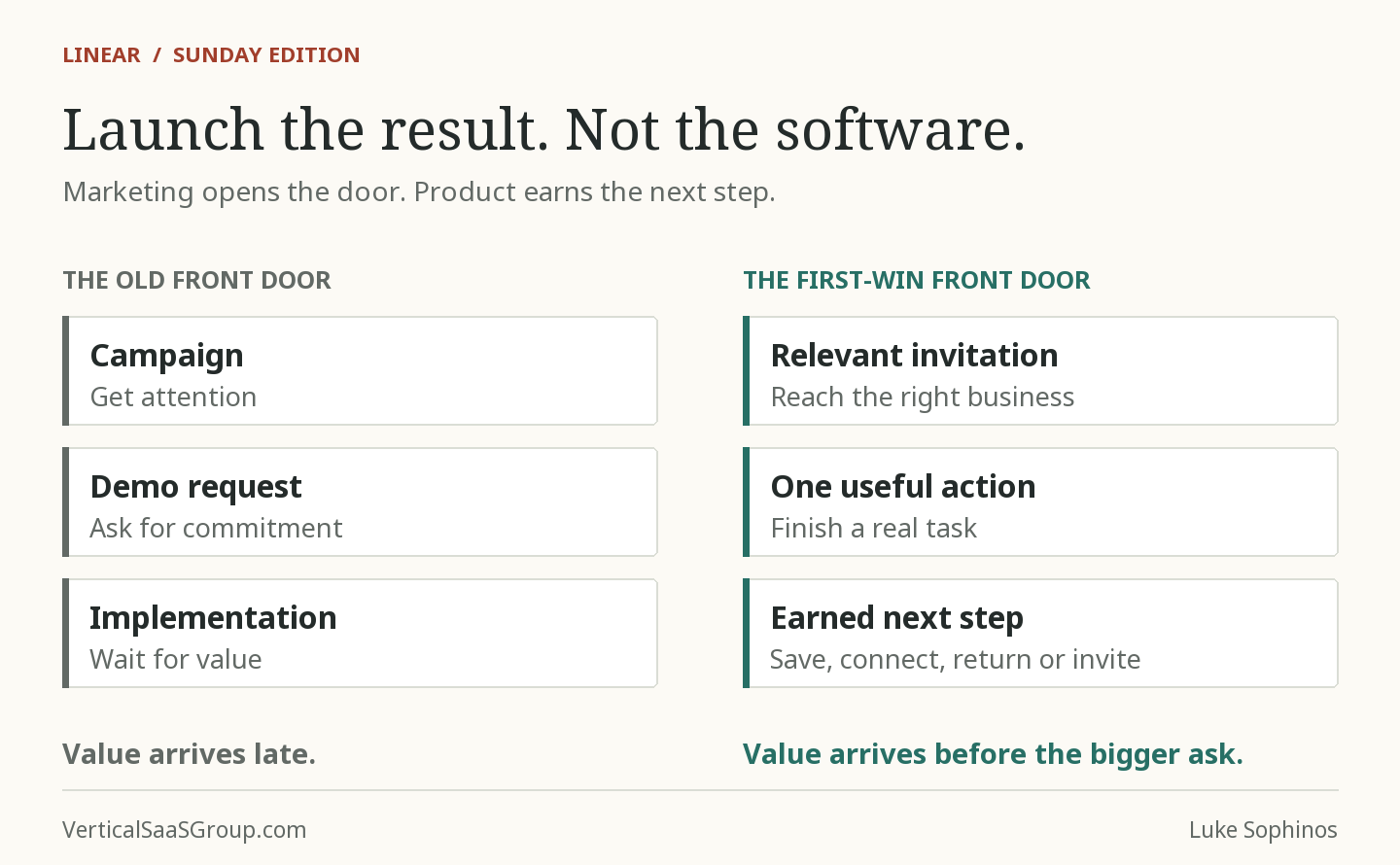

From ‘Book a Demo’ to ‘Here’s Your Work’
The old software launch separated marketing from product. Marketing got the lead. Sales showed the demo. Implementation got the customer set up. Only then did the product get a chance to prove itself.
The old way: sell the promise
Buy the booth. Run the ad. Publish the ebook. Send everyone to a landing page asking them to book a call.
The customer does the translating: “What would this actually do for my business?” A polished demo might help, but it is still someone else’s data, someone else’s workflow, and a promise about what comes after the purchase.
And if we’re being honest with ourselves are often were sales demo environments incredibly weak…
The new way: deliver a piece of the outcome
AI lets you turn a small input into useful work: a public study into a team briefing, an estimate into a follow-up, a budget document into an analysis, a service menu into a booking-page draft.
Those are not four different pitches. They are four ways to let the customer experience a result before evaluating the platform. The launch itself can do the work the marketing used to describe.
Free tools and product-led growth are not new. What AI changes is how much personalized work you can deliver before a full setup in one click.
The first experience can use the customer’s own context instead of making them explore an empty dashboard.
Same relationships. A different destination.
The conference, contractor group, finance workshop, and barber convention still matter. You still need to know where the buyer gathers and what they care about. But the invitation changes from “come learn about our software” to “leave with this task done.”

How to build a this motion for your vertical.
Think about the sequence you want a user to experience:
Relevant introduction → immediate action → useful result → next permission → another result → reason to return → reason to invite someone.
Each arrow is a place to lose the customer.
1. Pick the first win before picking the launch stunt
What can someone accomplish without an implementation project?
A restaurant gets a website diagnosis.
A contractor gets a usable estimate follow-up.
A barber gets an improved booking page.
A finance analyst gets a source-linked budget briefing.
Do not begin with “What would go viral?”
Begin with “What would make the right customer glad they clicked?”
Then build the launch around that action.
2. Remove the blank prompt
“Ask our AI anything about your business” hands the work back to the customer.
Give them a button:
Analyze and audit my SEO
Redo my entire website
Explain this estimate.
Summarize this public budget.
Build my morning brief.
Use the information already available to prepare the task. Make the result editable.
The customer should be judging the usefulness of the output, not their own ability to write a prompt. And AI can deliver pretty incredible outputs that companies used to pay thousands of dollars in consulting fees to get.
3. Make the promotion demonstrate the product
Hark’s pizza promotion is a useful example of the idea.
Reporting on its launch promotion described people downloading the app and typing “order a free pizza.”
The offer put the product’s ability to take action inside the acquisition campaign.
The interesting part is the alignment.
The reward required trying the core behavior, and allowing the user to learn the workflow.
For a vertical product, consider:
An estimate tool whose launch offer is a completed estimate draft.
A restaurant marketing tool that creates an approved campaign.
A booking assistant that demonstrates an appointment handoff.
A document product that returns a source-linked working brief.
A giveaway can rent attention. A well-designed promotion also teaches the user the product.
We should not confuse either with evidence of retention.
That has to be measured afterward.
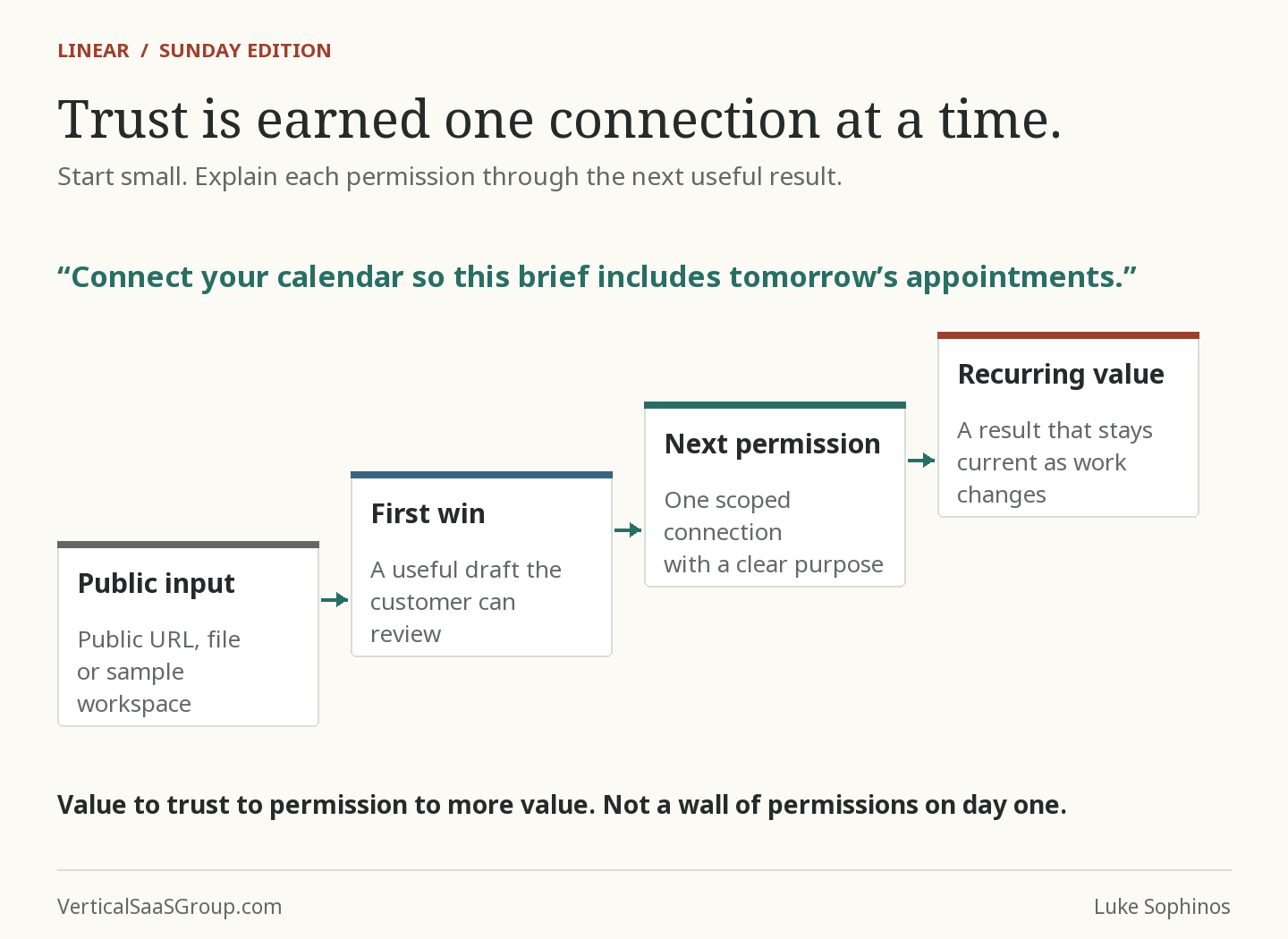
4. Earn integrations one at a time
Your first onboarding screen should not be a wall of permissions.
Start with public information, a sample workspace, or one authorized file.
Deliver something useful.
Then explain the next connection in terms of the next result:
“Connect your calendar so this brief includes tomorrow’s appointments.”
“Connect an approved estimate feed so these follow-ups stay current.”
“Connect your booking system so the recommendation reflects actual availability.”
Each connection should have a visible purpose, limited scope, and a clear way to disconnect.
The loop is:
Value creates trust.
Trust supports the next permission.
The next permission enables more value.
That is a much better onboarding strategy than asking for trust upfront.
5. Put the entry product where the buyer already gathers
A few vertical motions worth testing:
Facebook group → diagnostic.
An administrator-approved demonstration opens directly into a relevant tool. No webinar registration required to discover whether it is useful.
Conference → completed task.
QR codes lead to a preconfigured action, not a homepage. Measure attendees who finish useful work, not badges scanned.
Supplier delivery → activation.
A distributor includes a card with a task relevant to the delivery. Track whether that channel brings the right businesses.
Trade educator → reusable workflow.
An instructor teaches a process using the product. Students leave with a working template and a reason to return.
Peer introduction → shared artifact.
An owner sends another owner a useful result with a clear path to create their own version.
Targeted gift → business-specific experience.
The package identifies the recipient’s business and opens a relevant task. Personalization should improve relevance, not just decorate the mailer.
Do not force an app download where a mobile page can deliver the first win.
Remove friction until there is a reason to add it.
6. Add the velvet rope after there is something worth accessing
Instinct’s private-access approach shows another distribution idea worth separating from the product itself.
Reporting on its early access described a waitlist and invitations from existing members. That is a velvet-rope distribution mechanism: access itself gives people something to request and something to share.
The vertical version could be a limited founding cohort whose members can invite peers after completing their first useful workflow.
But the constraint should be real.
Limited onboarding capacity. Hands-on support. A genuinely staged rollout.
Manufactured scarcity around an unimpressive tool will not fix the tool.
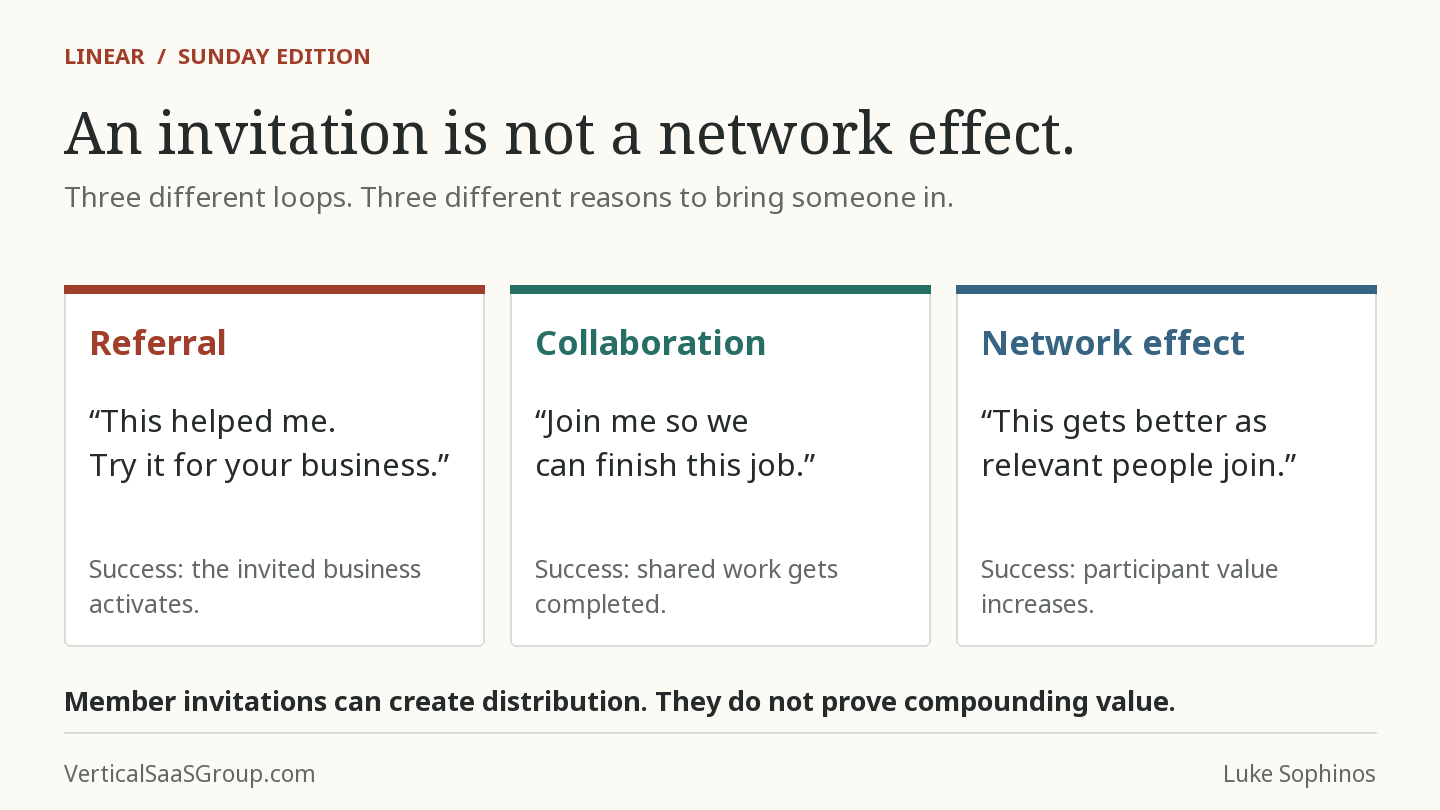
And keep three loops separate:
Referral loop: I invite someone because the product helped me.
Collaboration loop: I invite someone because we need to work together.
Network effect: The product becomes more valuable to participants as relevant people join.
Instinct’s invitation mechanism illustrates the first. It does not, by itself, establish the third. The sources reviewed do not establish its referral conversion or retention performance.
For verticals, build toward a useful reason to invite:
A shop owner brings in the team. A contractor invites a subcontractor into a shared job. An analyst brings a department head into a working budget brief.
The invitation should help finish the work.
7. Measure the handoffs, not the noise
Track:
How many target businesses reach the tool.
How many complete the first useful task.
How many return for the recurring workflow.
How many accept the next relevant integration.
How many invited users activate.
Whether usage produces a paid expansion opportunity.
Define activation around the work. “Generated a draft” is weaker than “reviewed and used the draft.”
A launch spike is not a flywheel.
A flywheel exists when one completed step makes the next one more likely.

Owner.com is executing this by making the prospective customer the demo
The appeal is what you might call a McKinsey-style diagnostic without the consulting engagement.
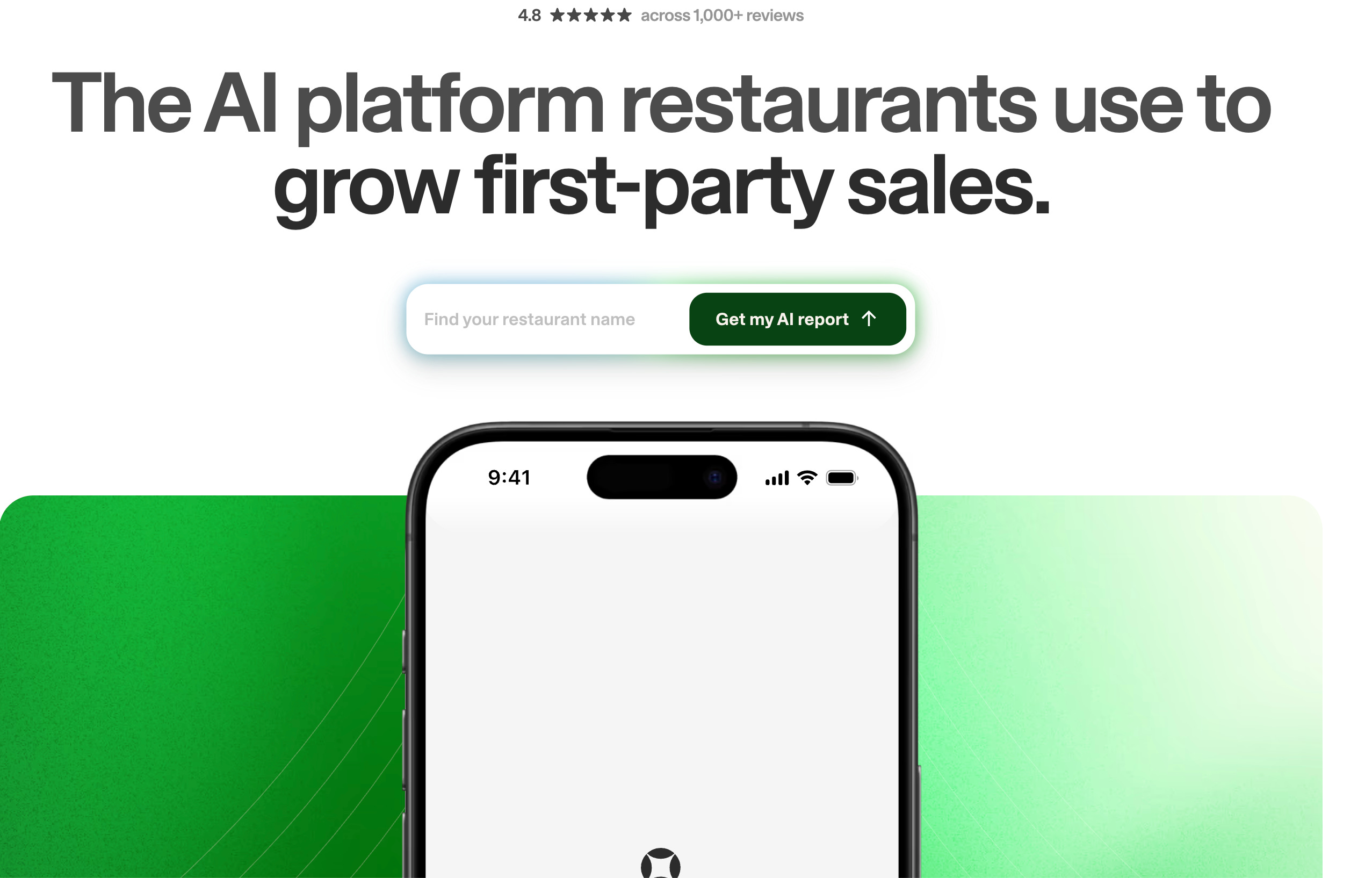
Here’s the offering:
First, a recognizable input. The owner has to simply put in their restaurant’s URL. No data export needed to express interest. No integration. Simply typing their store’s URL.
Second, a personalized diagnosis. Owner than outputs a report on the store’s own digital presence and nearby competitors. How are they doing on search, on AI responses, how does that compare to their customers? They use AI to look up every review, the quality of their photos online, etc.
Third, a connection to the commercial product. Owner sells restaurant websites, online ordering, branded mobile apps, and automated follow-ups. The issues its grader promises to inspect sit close to the problems those products address.
That adjacency matters.
A free tool can attract plenty of users who will never need the paid product. Here, the entry offer and commercial proposition concern the same business problem: improving the restaurant’s online customer journey.
Fourth, an opportunity to continue the work. After a useful diagnosis, the next conversation can be specific. Which findings are valid? What should be fixed first? What would implementation involve? Owner can help with all of these.
That is a better starting point than asking an owner to imagine why an unfamiliar platform matters.
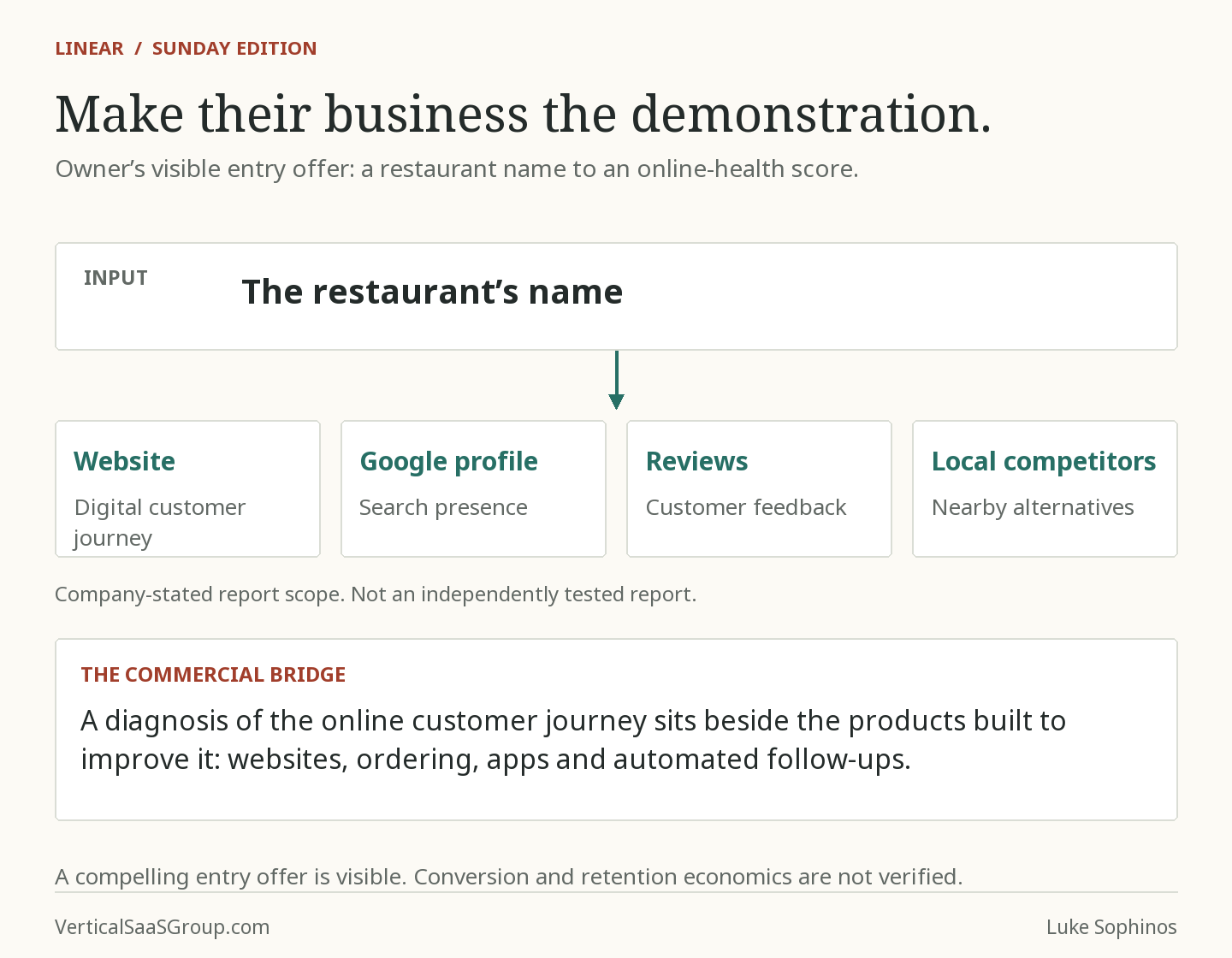
he visible offer demonstrates a compelling entry motion.
It does not prove the entire growth loop.
From what I’ve heard through the grapevine, this play has been crushing it for them.
But it gives vertical founders a very concrete question:
What can a customer give us in one simple step that lets us return something useful about their own business?
A website. A public document. A booking page. An authorized export.
Start there.
Show them something worth acting on. Help them act. Earn the next connection. Then give them a reason to bring someone else.
The best launch is not the one with the biggest announcement.
It is the one that leaves the right customer with useful work already done. With AS LITTLE FRICTION AS POSSIBLE.
///
The beauty of AI is that you CAN do this in your vertical right now, regardless of the type of customer you sell to or the product you offer.
Everyone should be thinking about building net new wedge products.
Whether you have 50% market share or your just getting started…
What a time to be building!!
Do me a solid and forward to a friend :-)