

Sell the the finished project, not the hammer
(where the customer has to do it themselves).
SaaS was stupidly easy to model. Recurring revenue, 80% gross margins, land-and-expand, negative churn. Investors could underwrite it in their sleep. And that, says Yoni Rechtman, is exactly why it’s over.
Here’s the uncomfortable math underneath the whole conversation: a normal business spends 1–3% of its revenue on software. It spends the other 97% on work; labor, contractors, BPOs, services. For fifty years that imbalance held because software was small but hard to make, and being small was survivable.
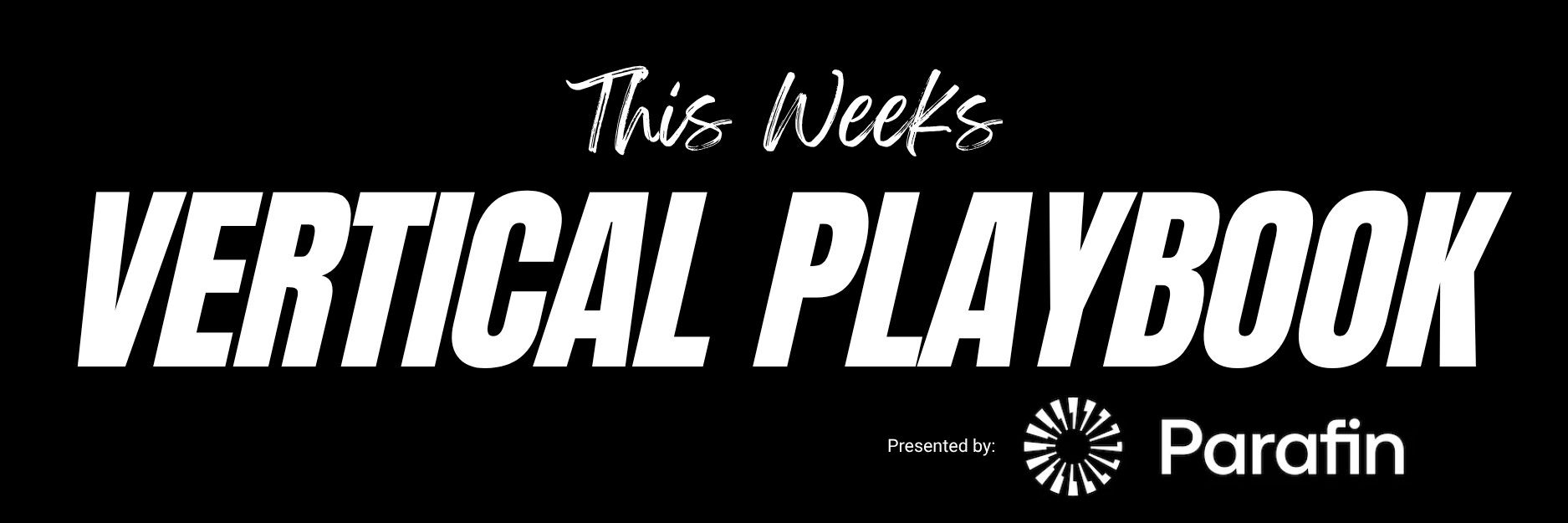
Two things just changed at once. Software got easy to build. And software got able to do things, to execute the work instead of merely representing it. You can now sell the hammered nail instead of the hammer, and the market for hammered nails is 30 to 100 times bigger than the market for hammers.
In the episode, Yoni walks through the five models he thinks actually work going forward:
1. Service to differentiate software (FDE) You take responsibility for the outcome, not just the tool. “I’m going to change my software around your business process, and I’m going to guarantee that it’s going to do that — and I’ll create that guarantee through a level of service.” This decommodifies the value proposition and lets you sell expertise and “AI transformation” through a different line item, not just a web app. It’s the forward-deployed engineer (FDE) model.
2. Software to differentiate a service (neo-firms) The inverse: you’re running a service business, but software is what makes you faster, cheaper, and higher quality than every other provider of that service. You own the delivery and the liability — which is why Yoni says he’d rather underwrite one of these than a “post-trained model in a nice UI.”
3. AI rollups: Buying existing services businesses and using software + AI to compress their cost structure and standardize delivery — a “growth buyout” wrapper. This is the model Slow has written decks about, where the software isn’t the product; the service company is the product and AI is the margin expansion tool.
4. Agent networks Start in single-player mode — do a unit of work for money, get paid to acquire customers — then flip into multiplayer mode once you own a population. Phoebe (home care) is the example: it starts as labor orchestration filling shifts, and the network of caregivers becomes the asset it can resell to new demand. The end state Yoni calls a “for-profit union.” This one, he says, simply “wasn’t possible before agentic AI” — the 2019 “come for the tool, stay for the network” attempts failed because there was no platform shift underneath.
5. Hardware to differentiate software Software moated by a physical device — the hardware is the wedge that keeps competitors (who only have API keys) out. This is the Metropolis-style play he references: physical infrastructure that software then operates and monetizes.
The throughline on all five: each one escapes the old SaaS trap of selling a tool into the 1–3% of revenue companies spend on software, and instead sells or owns an outcome in the other 97% — the labor and services line items. As he puts it, you can sell the hammered nail instead of the hammer, and the market for nails is 30–100x bigger.
Vertical Software Summit
Last chance before ticket prices go up September 1st!
We are already 80% sold out so if you’re considering coming to the Vertical
Software Summit this November, now is the time to grab your ticket.
All information at the link below.
It’s truly the best few days of the year in vertical software and vertical AI.
This Weeks Vertical Titan:
Yoni Rechtman (Partner @ Slow)
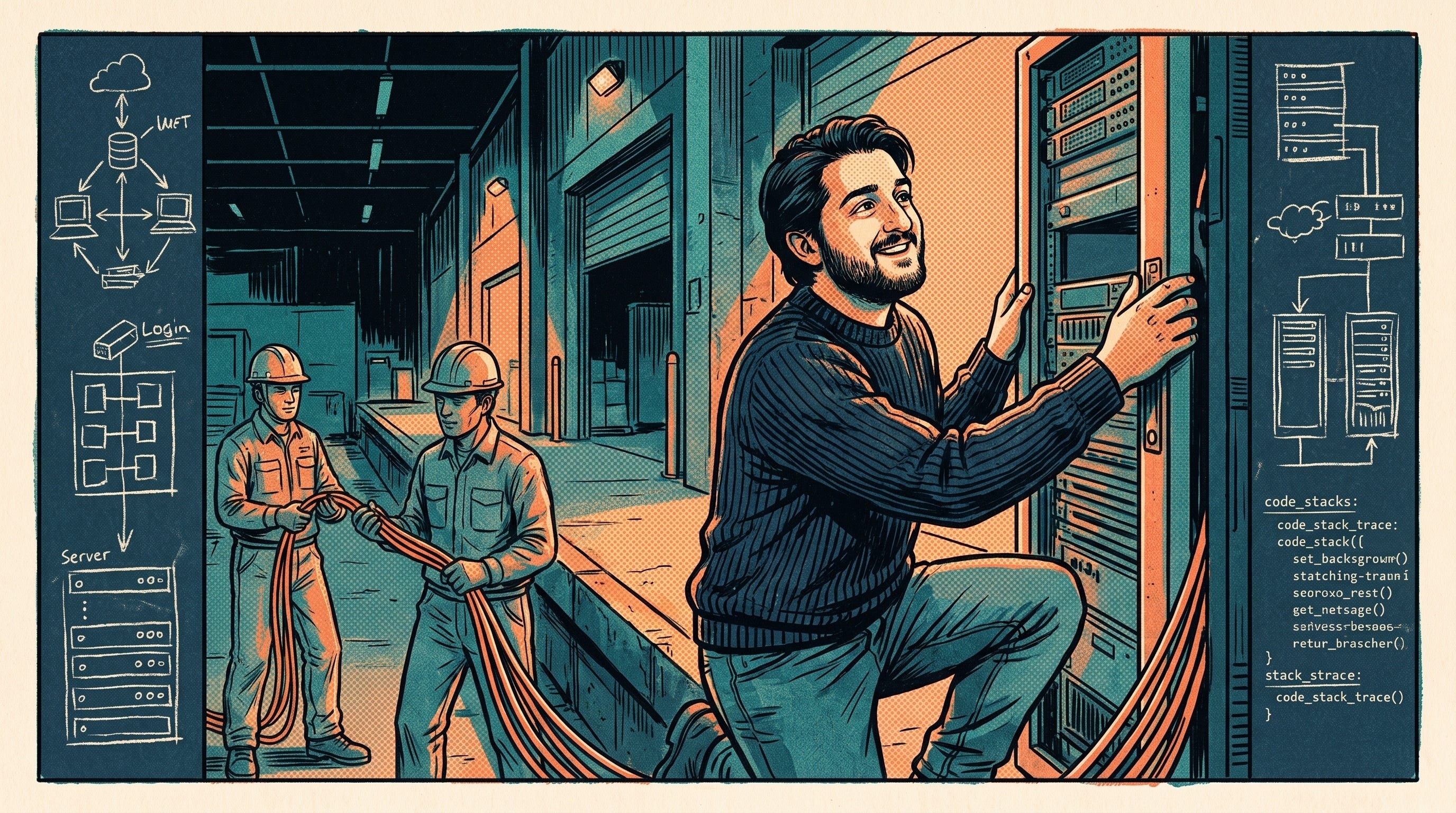
Yoni Rechtman is a partner at Slow Ventures, a seed and pre-seed fund. Ask him to describe the firm and he’ll say “generalist,” but that undersells it. Slow’s actual filter is narrower and more interesting: they’re basically hunting for new business models and capital structure wrappers for software, which, as Yoni puts it, “often winds up leading us towards vertical software or vertical AI, in the broadest sense.”
The portfolio proves the thesis. Slow was a seed investor in Metropolis, which used acquisitions to build its way into parking and is now a $5 billion AI company. They backed Recurrence, maker of Phoebe, the home-care platform positioning itself as a three-sided agent network. They led Ando’s seed round in restaurant staffing. The throughline isn’t an industry — it’s structure. Every one of these companies is trying to escape the software business model and own an outcome instead.
What led him here is one observation with violent implications: no one has ever woken up and wanted to buy workflow software. People want invoices sent, claims filed, shifts filled. The only software businesses that ever got to sell outcomes — Visa selling transactions, Uber selling rides, Google selling clicks, Facebook selling customers; were network-effects businesses. As he puts it, “I am starting with a recognition of what most people and businesses in the world want to spend money on, which is not software.” Everything else in this conversation follows from that.
01. Sell the hammered nail, not the hammer.
The core mechanic behind the entire episode: software is priced against the 1–3% of revenue companies spend on software, but the value of an outcome lives in the labor line item. The nth AI receptionist for dental clinics isn’t ripping because it’s better software — it’s ripping because the buyer compares it to a human they’d otherwise pay, not to their practice management system. And here’s the underrated reason that’s an easy sale: businesses love firing contractors. “You pay 7% of your revenue to a medical billing firm — I’ll do the same work for 5%, better and faster.” That drops straight to the bottom line.
Action item: Recalculate your TAM (and your pitch) against the labor or services line item you replace, not the software line item you improve. Position yourself as the contractor replacement, not the software upgrade.
#02. The income statement gets worse. Take the trade anyway.
Yoni is brutally honest about the new model’s economics. Inference cost hits gross margin. Switching costs collapse when the user is an agent swapping API calls instead of a human learning a UI. You can’t amortize R&D as long because competitive pressure is relentless. “Along basically every line of the income statement kind of gets a little bit worse — but the markets get a lot better.” His prediction: software companies get much bigger, run lower margins, and produce far more absolute dollars of revenue and cash flow.
Action item: Stop underwriting your business — and stop letting investors underwrite it — on SaaS-style margin profiles. Model it against a labor-sized market and be upfront that the margin structure is different. It’s the on-prem-to-cloud trade, on a bigger magnitude.
#03. Service to differentiate software — FDE as a pricing unlock.
The first model in the framework. The reason forward-deployed engineers have come into vogue isn’t Palantir’s cultural shadow — it’s that FDE “is allowing people to make bigger promises and therefore charge more money.” Most industries are reticent buyers because they don’t trust the promises: sales says nice things, post-sales says “we’ll do a training.” That’s why ACVs cap out at $50K instead of $500K. When you say “I’ll change my software around your business process and guarantee it works,” you decommodify the value proposition — and you sell into a different line item entirely, because right now enterprises are buying “AI transformation,” expertise, and future-proofing, not web apps.
Action item: If your ACV is stuck because buyers don’t trust the software alone to deliver the outcome, add a service layer that guarantees it — and charge for the guarantee, not the features.
#04. Ownership is the dividing line between software and a service.
Yoni’s test for any AI company: are you responsible for doing the work, or not? There’s no blurry middle. “Harvey could not simply decide to be a law firm — because then it would be a law firm.” He’d rather underwrite a company that owns delivery, quality, and liability — even at a lower likelihood of success — than “a post-trained model presented to you in a nice UI.” His comparison: Crosby definitionally adds value above its inference relative to Heartbeat, because Crosby owns the outputs and the quality of its work.
Action item: Ask which side of the ownership line you’re on. If you’re on the UI side, remember the customer is buying the model’s capability — and the margin accrues to whoever owns the outcome.

A quick word from our sponsor on the Verticals podcast, Parafin. Fresh off the 2026 Forbes Fintech 50 and a new credit facility led by Goldman Sachs, they’ve now extended over $35B in offers to small businesses through platforms like DoorDash, Gusto, and TikTok Shop.
Purpose-built embedded capital for vertical platforms.
#05. A BPO with tokens is a wedge, not a terminus — and the burden of proof is on you.
Yoni’s honest read: most vertical AI right now is “building BPOs with tokens instead of people.” That’s a great wedge and a murky end state, because someone can always come along and do the work cheaper, “either because their cost structure is better, or they’re just willing to tolerate lower revenues than you are.” His framing for founders and investors alike: “the burden of proof is on you for why there’s moat and terminal margin and terminal value, not on me to demonstrate that there isn’t.”
Action item: If your only moat is price, write the plan for what happens when the undercutting starts — self-improving systems that hit escape velocity, trust and brand, network effects, or distribution. “We do it cheaper” is not a plan.
#06. Everyone has the same API keys — a better prompt is a bet against model progress.
Yoni’s one piece of religion: “We all have access to the same API keys, so no matter what you do, you have to substantially differentiate tokens and code.” Better prompts are not a long-term differentiator. His exhibit A is Jasper, which was “selling a series of skills and prompts for copywriting” and got eaten the moment models absorbed the skill. Even “proprietary data” is fragile — the model labs are actively buying that data to fold into the weights. The PowerPoint corpora people called proprietary a few years ago? “The labs just bought it.”
Action item: Assume any differentiation expressed as a prompt, a thin fine-tune, or a dataset a lab could purchase has a short shelf life. Durable value has to live in workflow ownership, process, distribution, or network position.
#07. Get paid to acquire customers — the single-player to multiplayer motion.
The most novel model in the framework: agent networks. Start in single-player mode with a clear, legible value prop — doing a unit of work for money — and use that revenue and customer access to acquire a large population, then flip into multiplayer mode. The last generation of network businesses spent their way through the cold start problem (free pizza, subsidized rides, signup cash). The new generation gets paid to acquire customers. Yoni’s answer for why “come for the tool, stay for the network” failed in 2019: there was no platform shift underneath — “no profound emerging capability, just two separate kinds of capabilities put together.” Agents that can actually do the work are the shift.
Action item: Before you start, be specific about the second thing you’ll be able to do once you own a population of customers. If you don’t have a conviction about it, you’re just running a services business with extra steps.
#08. The for-profit union.
Slow’s portfolio company Recurrence (the Phoebe product) is the model in action. It starts as labor orchestration for home care — filling shifts for agencies. In doing so, it gets in front of all the caregivers, the entire supply side. The obvious next step is a talent agent: resell that supply to new sources of demand. The agency pays them to build the network; then the network becomes the business. Yoni calls the end state a for-profit union — “if you can serve a valuable universe of supply and control the attention of that valuable universe of supply, there’s a huge amount to do with it.” And one thing agents are genuinely good at: managing attention and negotiating.
Action item: Look for businesses where doing paid work plants you in front of a concentrated supply pool. The network asset you unlock is worth more than the work you’re billing for.
#09. What the customer thinks they’re buying is what you’re selling.
When Nic argued the service/software line is blurry and useless, Yoni pushed back hard: “It’s not unclear for the customers. Whatever they think they’re buying is what you’re selling.” If they think they bought software, you get priced and sold like software. If they think they bought a service, they expect ownership, liability, and someone to call. The customer’s belief dictates your promises, your channel, and how you charge — “all of those things are really dictated by what the customer thinks they’re buying.”
Action item: Audit every touchpoint — sales collateral, pricing page, onboarding — for what the customer would conclude they bought. Fix the mismatch between what you think you’re selling and what they’d say they bought.
#10. The compounding asset is the entire game.
Yoni’s test for whether any of this holds up: from customer 1 to customer 20, something has to get better. “You want to say every customer we get, the product is better and more valuable.” If every engagement is de novo — “every customer is its own snowflake and butterfly” — there’s no compounding asset and you don’t have a venture business; you have a high-end consulting shop. His most contrarian suggestion for where that asset can live: productize the process, not what flows through it. The first scaled consulting businesses — BCG, Bain, McKinsey — were selling a new technology of scientific management, not outputs. “Process and product are distinct until they’re not.”
Action item: For every new customer, ask what the engagement teaches you that makes the next one cheaper, better, or faster. If the honest answer is "nothing," you're not building an asset — and the process you use to deliver may be more productizable than the thing you hand over.

Sell the hammered nail, not the hammer.
Own the work, not the workflow.
Get paid to acquire customers.
Four things worth taping to the wall — whether you’re building the next vertical AI company or underwriting one:
The money is in the labor line item, not the software line item. Businesses spend 1–3% of revenue on software and the other 97% on work. Software can finally do that work, which means the addressable market just got 30 to 100 times bigger. Position against the contractor you replace, not the incumbent software you improve — businesses love firing contractors.
Ownership is the dividing line. Either you’re responsible for doing the work or you’re not, and the customer always knows which one they bought. Harvey can’t simply decide to be a law firm, because then it would be a law firm. A company that owns delivery, quality, and liability is worth more than a post-trained model in a nice UI — because the margin accrues to whoever owns the outcome.
The burden of proof is on you. Most vertical AI right now is a BPO with tokens instead of people. That’s a wedge, not a terminus — someone can always do the work cheaper. Assume there’s no moat, terminal margin, or terminal value until you prove otherwise. Everyone has the same API keys; a better prompt is a bet against model progress. Take the uglier income statement if it buys you a labor-sized market.
Networked verticals get built by people who get paid to build them. The last generation burned capital through the cold-start problem. This one inverts it: do a unit of work, earn the customers, then flip single-player into multiplayer. Recurrence’s home-care story is the template — get in front of all the caregivers, and the end state is a for-profit union. But it only compounds if every new customer makes the product better. If every engagement is de novo, you’re a consulting shop with a data-lake accessory.
If there’s a single through-line to steal from Yoni this week, it’s this: the best software companies of the next decade sell outcomes into the 97%, structure themselves as services where ownership is the moat, get paid to acquire the networks that make them defensible, and never mistake access to API keys for a business. That’s the compounding formula.
Big thanks to Yoni for opening up the Slow Ventures thinking to the rest of us. If you’re building or backing the software layer, the services layer, or the agent-network layer of a vertical, this episode is required listening. Forward it to a founder or an investor in vertical AI. If you’re building something interesting in the space, my inbox is open.
See you next Wednesday.
— Luke Sophinos
Thanks for reading LINEAR. I reply to every email…
Have any questions, feedback, comments? Let us know, we work for you!