

Every clean-energy project meets the same bottleneck: the spreadsheet on someone’s laptop at 2am.
That’s where trillion-dollar capital meets a workflow that hasn’t changed since 2005.
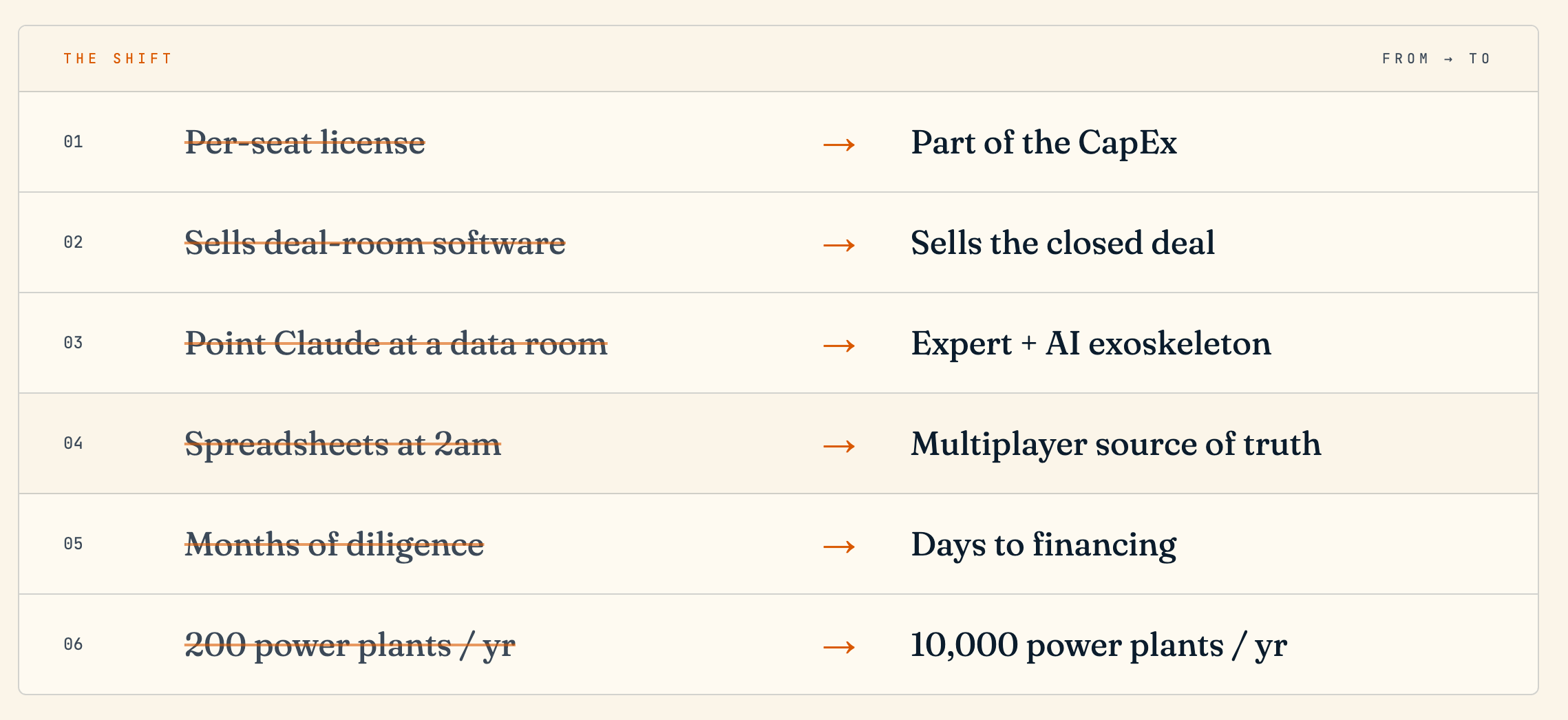
In 2005 the United States built 200 grid-scale solar projects. Today it builds 10,000 every year — with the same overworked analysts, the same spreadsheets, the same hope. 60% of projects get delayed. 30% are killed outright.
That gap between the volume and the tooling is the entire opportunity. Jacob’s argument is that the next iconic vertical companies won’t sell software seats into this world — they’ll sell outcomes into the CapEx of every project getting financed, built and operated.
This Weeks Vertical Titan: Jacob Sandry (Founder & CEO @ Euclid Power)

Jacob got into renewables ten years ago as a self-described hippie kid working at a solar crowdfunding startup. He spent the next six years on the finance side — the last three helping build Goldman Sachs’s renewables fund from $0 to $3B deployed across wind, solar and storage.
From inside the investment committee he watched the same pattern repeat hundreds of times: brilliant developers, real projects, billions of dollars of capital — all bottlenecked by analysts in Excel reconciling PDFs at 2am. 60% of projects slipped. 30% died outright. Always at the same mile.
He left to build the thing that should have existed. Euclid Power — recently named one of Fast Company’s Most Innovative Companies for 2026 — is now the system of record for the messiest mile of energy: development, financing, M&A and the hand-off into operations. It is software, services and AI, sold into the CapEx of the project itself rather than as a per-seat tool the procurement team will haggle over for nine months.
Customers run the gamut from independent developers shepherding a single interconnection through PJM, to the largest IPPs and infrastructure funds in the world closing nine-figure portfolio deals on Euclid’s deal rooms. The common thread: they all need the numbers to be right the first time.
Below — nine lessons from Jacob on how to actually build, sell and defend an AI-native company in a high-stakes vertical.
1) In high-stakes industries, 99% is the same as wrong
When you’re underwriting a $100M solar project at 6% unlevered returns, you can’t ‘fail half the time’ the way VC does. A single missing line in a permit, a stale interconnection number, a misread tax credit clause — any of them can sink the deal. Vertical AI for this world isn’t about generating plausible answers. It’s about being defensibly right, every time.
Action item: Define the failure mode before the feature. If a wrong answer is unforgivable, design accuracy in from day one.
2) Sell into the CapEx, not the SaaS line item
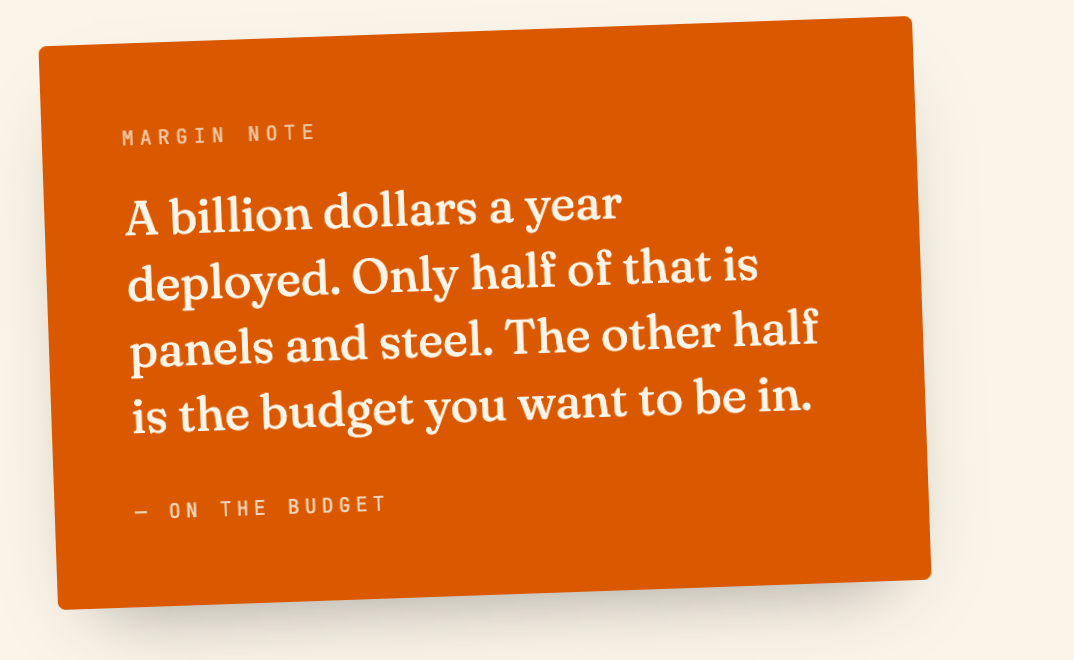
Half the spend on a renewable project goes to admin, lawyers, IE reports, appraisers and project managers — and all of it gets capitalized into the deal. That’s the budget Euclid sells into. Per-seat pricing caps you at a tiny pool of analysts. Outcome-priced services tap into the actual project budget that the industry has already accepted.
Action item: Find the budget your customer doesn’t think of as ‘software.’ That’s usually where the real money lives.
3) In CapEx-heavy verticals, lead with services
Euclid started as a spreadsheet. Customers said: ‘we’d pay you 10× more if you’d just do the work.’ That accident became the business model. In capital-intensive industries, going in with a service and a solution is often a better wedge than trying to license a platform — because the customer is buying outcomes, not tools.
Action item: Don’t be afraid to look like a services business on day one. Software is what makes the margin scale later.

A quick word from our incredible partner,
Parafin - the leading embedded capital partner.
4.8 star rating on Trustpilot, with over 500 reviews [source]
71% CSAT rating across all partners
84 NPS
Serving top Fortune 500 companies, including Amazon, Walmart, and DoorDash
4) Build an exoskeleton, not an autopilot
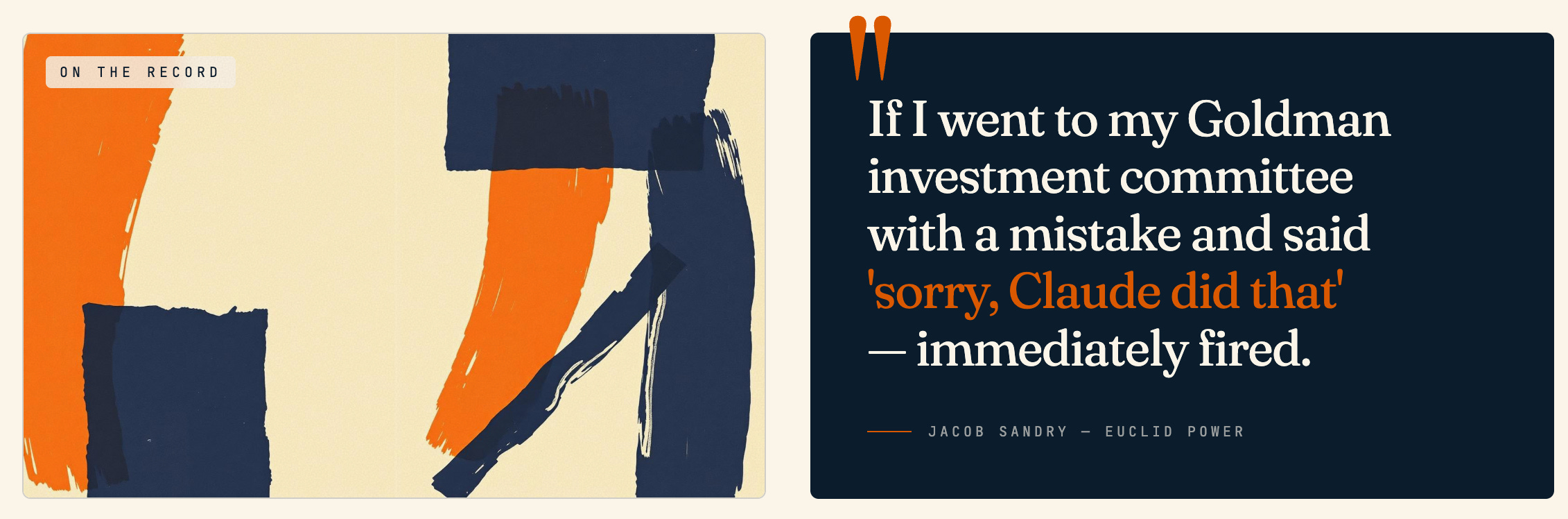
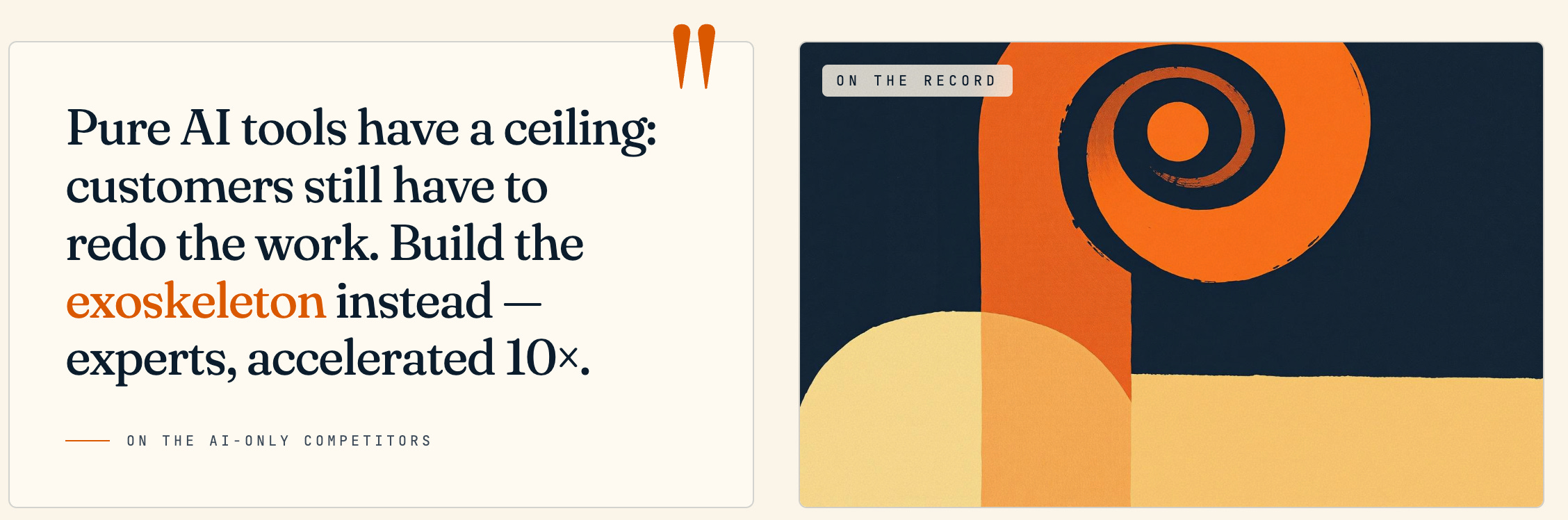
Pure ‘point Claude at the data room’ tools hit a ceiling fast — customers still have to redo the work. Euclid’s pitch is the opposite: experts who already know the right answer, accelerated 10× by AI that surfaces, suggests, and cites. Investment committees can stand behind that. They cannot stand behind ‘sorry, Claude did it.’
Action item: Pair AI suggestions with a human accountable for the outcome. That combination clears the trust bar.
5) Win the moment the data has to be right
Every vertical has a control point — a moment where information must be accurate and naturally flows into a system. For Euclid it’s diligence. For others it’s intake, claims, or close. Own that moment and you become the multiplayer source of truth for everyone downstream: lawyers, engineers, contractors, investors.
Action item: Map your industry’s workflow and find the one moment where messy data must become clean data. Win it.
6) Structured data is the bridge LLMs still need
Even as models get better, the gap between unstructured documents and reliable outcomes doesn’t close on its own. The verticals where SaaS never quite landed weren’t unworkable — extraction was just too expensive. AI collapses that cost. But the durable value sits in the structured layer in between: the same fields, captured the same way, across thousands of projects.
Action item: Treat your schema as the moat. Models change every quarter; a clean structured graph of your industry compounds.
7) Trust is a moat — even if Silicon Valley pretends it isn’t
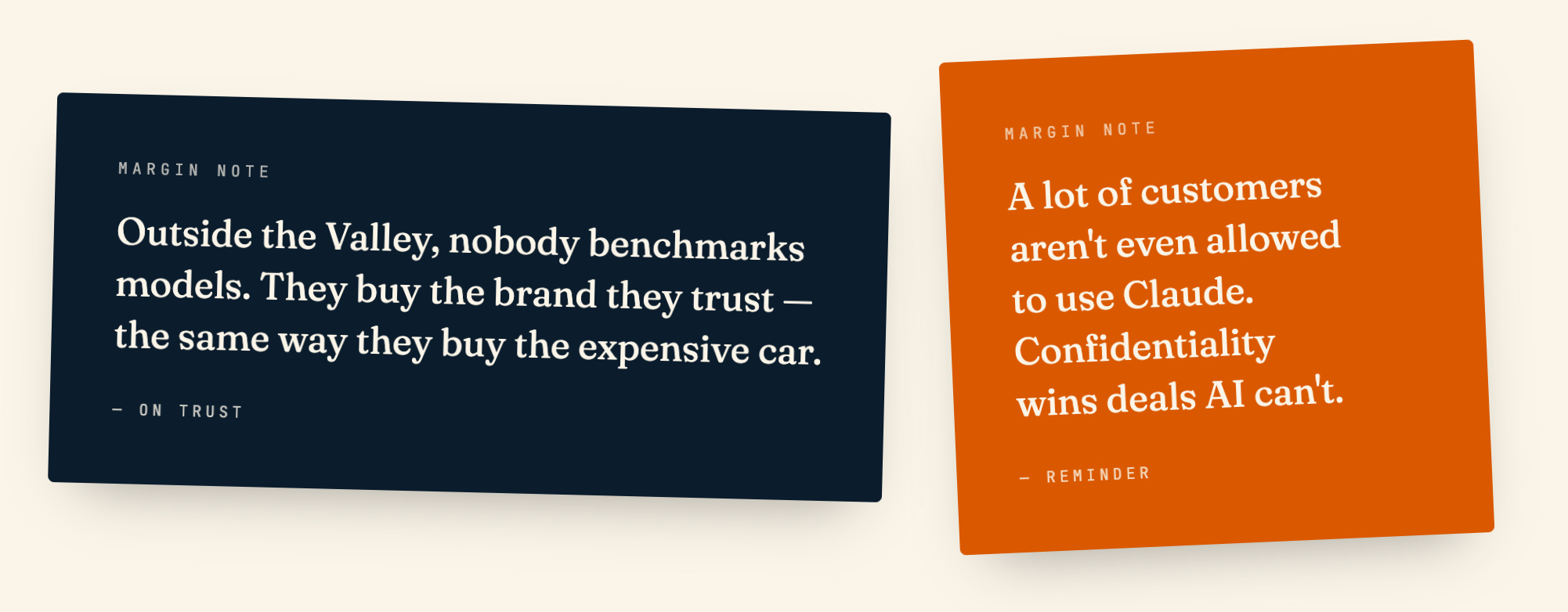
Outside the Valley, people don’t tweet benchmarks. They buy the brand they trust, the way they buy the expensive car. Many vertical buyers are still skeptical of AI itself. Some aren’t even allowed to use Claude. The companies that win aren’t the ones with the best model — they’re the ones that earn the right to be trusted with a $100M decision.
Action item: Invest in brand, references and accountability earlier than feels rational. In high-stakes verticals it compounds.
8) Regulation is a moat — but only sometimes
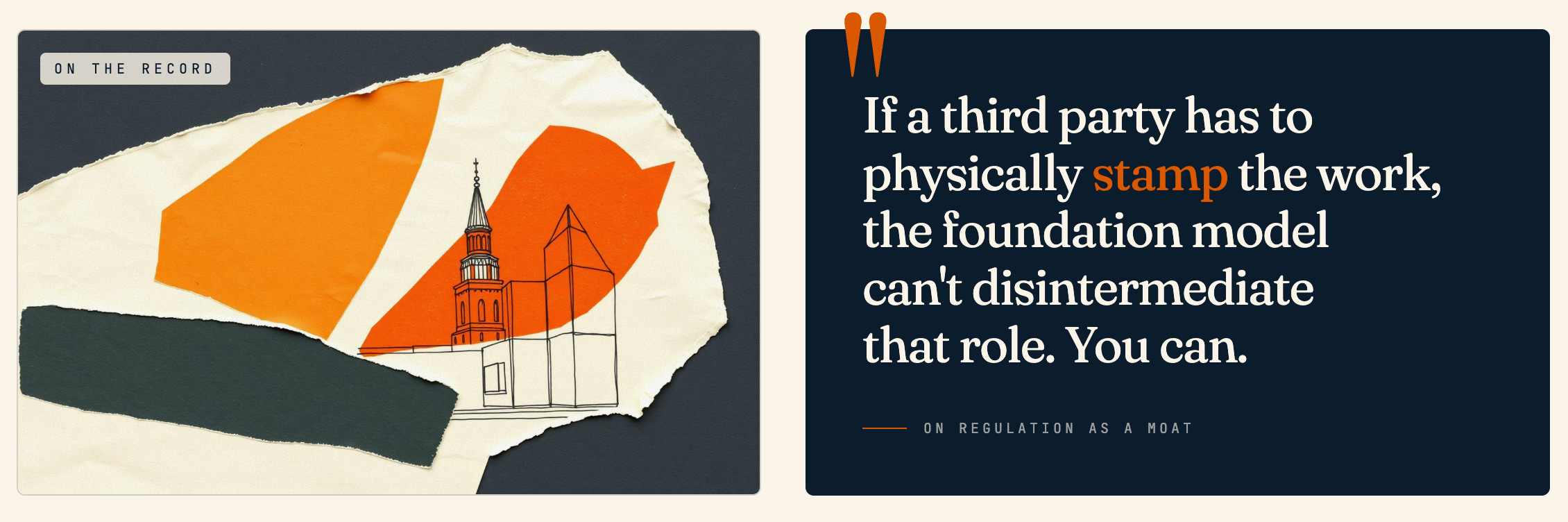
If a third party has to physically stamp the work — an IE, an appraiser, a tax-credit auditor — the foundation model can’t disintermediate that role. You can. If the regulation is just rules a model can read, that’s not a moat: any competitor can wrap the same AI around it. Be honest about which one you actually have.
Action item: Map every regulatory checkpoint in your vertical. Look for the ones that require a human signature — those are the wedges.
9) Be the Schlumberger of your industry
In oil and gas, the Fortune 200 names you’ve never heard of — Schlumberger, Baker Hughes — are the picks-and-shovels for every well drilled. Renewables, electrification and AI infrastructure are about to need the same. Software, services and field expertise wrapped together. Not just better dashboards. The operating system that makes the projects actually get built.
Action item: Pick a vertical going through a generational build-out. Become the indispensable solutions provider, not a tool vendor.
The next great energy companies
won’t sell software. They’ll sell outcomes.
If you’re building vertical AI for a high-stakes industry, Jacob’s playbook comes down to three commitments:
1. Take the problem seriously. Bring in people who have lived it. In trust-driven industries, naive outsiders don’t get a second meeting.
2. Be defensibly accurate. Pair AI with experts accountable for the answer. Investment committees back people, not autocomplete.
3. Sell into the real budget. CapEx, services line items, project budgets — not the SaaS line. That’s where the order of magnitude lives.
In oil and gas, the indispensable companies are names like Schlumberger and Baker Hughes — the picks-and-shovels nobody outside the industry can name. The next renewable build-out will need its own. Euclid is betting it can be that company.
Thanks for reading LINEAR. I reply to every email…
Have any questions, feedback, comments? Let us know, we work for you!
Vertical AI accuracy thresholds are the procurement blind spot most buyers skip. When 99% isn’t acceptable in healthcare or finance, the real evaluation criteria shifts from feature lists to failure mode documentation — what happens when the model is wrong, how fast does the vendor acknowledge it, and what’s the contractual liability. Mid-market buyers in regulated industries should be asking for that in writing before any POC.