

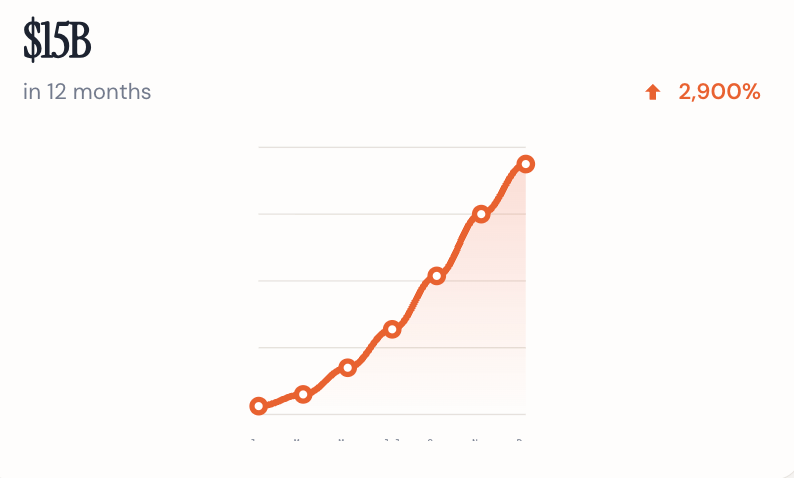
Chris Hladczuk sat down with Nic and Luke Sophinos to unpack how Hanover Park went from zero to fifteen billion in assets under administration—and why AI-native services are eating B2B SaaS alive.
Vertical Titan: A Maniac On A Mission
Chris Hladczuk is the kind of founder who makes you reconsider what ambition looks like in practice. Before Hanover Park, he was deep in the trenches of financial services—not as a technologist looking in from the outside, but as someone who understood the industry’s rhythms, its pain points, and its deeply entrenched trust dynamics. He saw what most people saw: an industry dominated by legacy players, allergic to change, and held together by relationships built over decades. But where others saw an impenetrable fortress, Chris saw a category ripe for reinvention.
The insight wasn’t that fund administration needed better software. Plenty of people had tried that. The insight was that fund administration needed a fundamentally different kind of company—one that combined the service intensity of a white-shoe accounting firm with the technological ambition of an AI-native startup. Hanover Park was built on the conviction that if you could automate the invisible, grueling, error-prone back-office work with AI agents, you could redeploy every human toward high-caliber advisory work. The result: a team Chris calls “the Navy SEALs of fund accounting.”
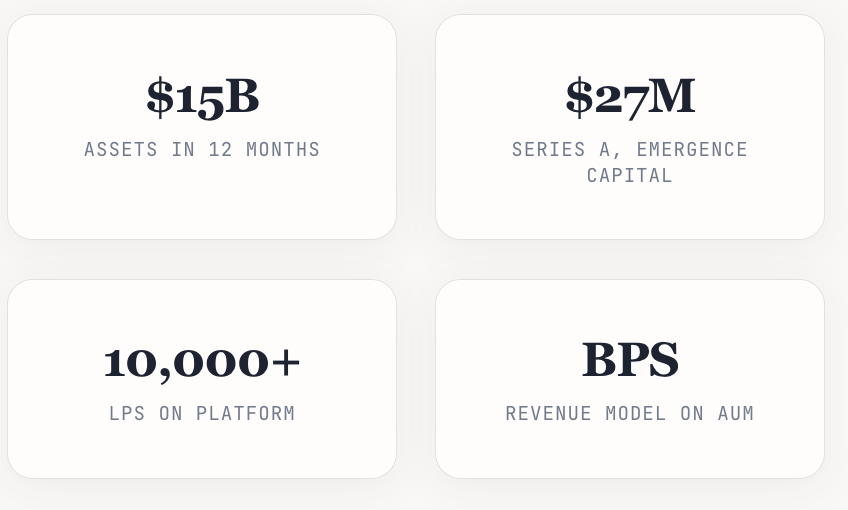
In twelve months, Hanover Park went from zero to fifteen billion dollars of assets under administration. They raised a $27 million Series A from Emergence Capital. They have over 10,000 LPs on the platform. And Chris believes they’re just getting started—because the real unlock isn’t the product. It’s the model: sell outcomes, not software. Charge basis points, not subscriptions. And never, ever say the word “AI” to a CFO.
When Nic opened the conversation by asking about the trust problem—the deep-seated human need to have a person you can call when you’re frazzled, when the numbers don’t add up, when you need someone who has your back—Chris didn’t dodge it. He leaned into it. Because the trust problem is exactly the problem Hanover Park was designed to solve, not by eliminating trust, but by earning more of it.
The Trust Problem. Why you pay your accountant isn’t about the math.
Nic framed it perfectly: “Why you pay your accountant, your private wealth advisor, your tax guy—yes, of course you want it to be accurate. But you also want somebody you trust. You can call up Joe or Kim and they’ve got your back.” In fund administration, this dynamic is amplified by the sheer complexity of the work and the magnitude of the stakes. A fund admin’s mistake doesn’t just mean a wrong number—it can mean failed LP reporting, botched audits, or a CFO losing their job.
Chris’s response to this was surprisingly old-school for someone building an AI company: he didn’t talk about replacing the relationship. He talked about making it better. “Automate the work you don’t see,” he said, “so we can provide high-level advisory work and white-glove service for the things you do see.” The idea is deceptively simple: by deploying AI agents to handle the core transactional layer—cash reconciliation, document parsing, KPI extraction—you free up every human on the account to be a high-caliber CPA focused on complex, edge-case advisory work.
The structural advantage this creates is profound. Because Hanover Park doesn’t need an army of humans clicking buttons to reconcile cash, they can hire fewer, better people—people they can pay more, people they can give equity to. The result is a team of what Chris calls “the Navy SEALs of fund accounting.” It’s a phrase he’s quite proud of. “I don’t think those four words have ever been said together in the same sentence,” he laughed.
“It feels like I have 25 people on my account when they have two.”
— Hanover Park customer
That customer quote isn’t marketing copy. It’s the lived experience of what happens when you combine elite human talent with AI agents that handle the mundane. And it gets at a subtlety that most AI companies miss: the goal isn’t to replace the human. It’s to make the human so much more effective that the customer feels like they have an entire team dedicated to them—because, in a way, they do.
Nic pushed back on this, drawing from his own experience as a fund manager. “When these models try to scale and they get rid of the Joe personally, and you switch it out with Euclid at whatever, it becomes impersonal and context is lost.” Chris agreed—which is why Hanover Park assigns a dedicated team to every account. No rotating cast. No faceless support tickets. Your team is your team.

Today’s episode is brought to you by Parafin - the leading embedded capital partner.
4.8 star rating on Trustpilot, with over 500 reviews [source]
71% CSAT rating across all partners
84 NPS
Serving top Fortune 500 companies, including Amazon, Walmart, and DoorDash.
AI prepare. Human review.
When Nic asked about the tech stack—specifically, how Hanover Park handles hallucination risk in an industry with zero fault tolerance—Chris laid out his operating paradigm in four words: “AI prepare, human review.”
Here’s how it works in practice. A fund manager—let’s call him Nic, because that’s literally who Chris used as an example—forwards a legal invoice to Hanover Park. At a traditional fund admin, someone would force Nic to log into a portal, fill out forms, and wait. At Hanover Park, the email itself is the interface. An AI agent reads the email, creates tasks, proposes journal entries, and executes against the ERP. A human reviews and approves—the whole thing takes minutes.
“Literally someone called me who switched over from a previous fund admin,” Chris recalled. “They said, ‘How did that happen in six minutes? That was crazy.’ But a human literally had everything queued and all the human did was approve and reply back automatically.” The customer gets the speed of AI. Hanover Park gets the accuracy of human review. Everyone wins.
This matters because in financial services, accuracy always trumps speed. Chris was explicit about this: “The worst pitch ever to a CFO is ‘trust me, it’s AI.’ That’s not a good pitch. I don’t actually say the word AI very much.” Instead, he lets outcomes speak for themselves. When a CFO sees their data updated in real-time instead of waiting weeks for a quarterly reconciliation, they don’t need to know there’s an AI agent behind it. They just know the service is exceptional.
Be where your customers are.
A recurring theme throughout the conversation was Chris’s disdain for the “2018 SaaS paradigm”—forcing customers into a portal to click seven buttons. Instead, Hanover Park builds its products around how CFOs and fund managers actually work: email, board decks, and conversation.
✉️ Email Agents
Forward a bill, delegate like you’re delegating to a human. The AI agent reads the email, creates tasks, proposes journal entries, and executes on top of Hanover Park’s ERP. A human reviews and approves in minutes. One customer asked, ‘How did that happen in six minutes?’
📊 KPI Reconciliation
Send a board deck or founder update—any format. Hanover Park’s KPI reconciliation agent pulls out context, extracts metrics, and cross-references against the ERP and the old-school SaaS forms. Most customers don’t even fill out KPI forms anymore. They just send an email.
🔍 Portfolio Intelligence
Every deal generates accounting data. Hanover Park weaponizes it—AI-parsed legal docs, cap tables, board decks, and KPIs—bundled free alongside core fund admin. It’s three tools competitors sell separately, delivered better because they share the same source of truth.
🔗 MCP Server
Every piece of data in your firm’s history, accessible through a model context protocol. Generate any customized PDF report on demand. ‘No other fund admin has even considered this,’ Chris said, ‘because the industry is so old school they don’t call it a product—they call it a system.’
B2B SaaS is dead.
In September 2024, Chris went on Turner Novak’s podcast, The PLN, and declared B2B SaaS dead. “Everyone told me I was an idiot,” he recalled. “Now, with Claude and Anthropic, it seems like I’m not an idiot. This actually makes a lot of sense.”
The argument is structural, and it’s worth unpacking. If building software becomes trivially easy—and it is becoming trivially easy—then the application layer commoditizes. What Chris calls “Opus 4.6 to Opus 5.6” will eventually be able to handle the execution layer that many vertical SaaS companies rely on today. The question he asks is: what are the model providers not going to do?
His answer: OpenAI and Anthropic are not going to build a fund administration services company that does accounting for Nic. They’re not going to hire CPAs, stand up an ERP, handle LP reporting, and fly to a CFO’s office at midnight when something goes wrong. Even if the AI can do the core work, no one at those companies wants to be a services business that handles fund accounting. That’s the moat.
“Sell outcome, meaning do accounting—not sell software to accounting firms,” Chris summarized. “I think that’s more interesting and has less potential disruption risk.” The business model reflects this conviction. Hanover Park doesn’t charge a SaaS subscription. They charge basis points on AUM. As Nic pointed out, this gives them revenue quality that mirrors traditional subscription businesses—with the added benefit that your worst outcome as a closed-end fund is a ten-year relationship.
“If Brett Taylor is thinking that the system of record is less important—it’s what the agent context has—that pushes my thinking on how we need to be intellectually honest about this.”
— Chris Hladczuk
When Luke asked whether software companies might eventually become AI-native services businesses themselves, Chris was skeptical. “The entire way in which you approach the market is different,” he said. “I have fund accountants sitting ten yards from me in New York City. Fund accountants have never joined a startup before. Period. That is a very different recruiting function, operations function. It’s so different from having a bunch of engineers, salespeople, and designers in a room.” The cultural barrier, he argued, is underrated. Software companies becoming services companies isn’t just a business model shift—it’s a DNA transplant.
Mr. Bundle.
Most investment firms buy five to seven standalone tools: portfolio management, portfolio monitoring, valuations, tax, LP portal, fund modeling. None of them are great. None of them talk to each other. And none of them share the core accounting data that makes them useful.
Hanover Park bundles all of them into core fund administration, powered by the same source-of-truth ERP. It’s not a freemium play. Chris will never sell standalone portfolio tools—a stance that Luke actively pushed back on during the episode. “Couldn’t it be valuable to have every single fund on Hanover Park and then cross-sell them over time?”
Chris’s response was categorical: “I am Mr. Bundling. I literally hate the word unbundle. I will literally never sell the standalone product of Portfolio Tools.” His reasoning is specific to the industry: the reason other standalone portfolio tools aren’t great is precisely because they lack the core source-of-truth data that lives in the accounting system. “When you unbundle, the products are actually worse. So now I’m going to deliver you a bad portfolio experience? That’s not going to be great.”
The wedge product—the thing that gets funds in the door—is the portfolio intelligence tooling that AI-parses legal docs, cap tables, and board decks. But the wedge only works because it’s bundled with the core fund admin. Separate it, and you lose the data advantage that makes it compelling.
“I literally hate the word unbundle. When you unbundle, the products are actually worse.”
— Chris Hladczuk
Always get on the plane.
Switching fund admins is, as Chris put it, “asking someone to get married on the first date.” When it’s one or two funds, it’s not that big of a deal. But when you’re ripping out seven funds with 22 entities, 37 sub-structures, and 10 SPVs on top, the CFO has to look you in the eyes and decide: do I trust this person with my job?
Chris’s approach to this is radically personal. “I literally, at the drop of a hat, will get a text message from a CFO being like, ‘Hey, I don’t know about this.’ I’ll call them immediately, book a flight, and be there tomorrow morning. Then we’ll lock ourselves in their office for four hours and get to work.” He coins it as “always get on the plane”—a phrase he claims to have invented on Twitter, which has since been widely adopted.
Luke pushed him on sustainability: “You’re the maniac on the mission. You tweet about sleeping at their offices. Tell the founders listening what this actually takes.” Chris was candid: “We need to get out of founder-led sales. I’m on seven jobs right now. We’re a little too big for this, honestly. But I like staying close to it.” The intimacy isn’t just a phase—it’s a signal. If the founder isn’t willing to get on a flight for the most important vendor decision a CFO will make, why would the CFO trust the company for the next ten years?
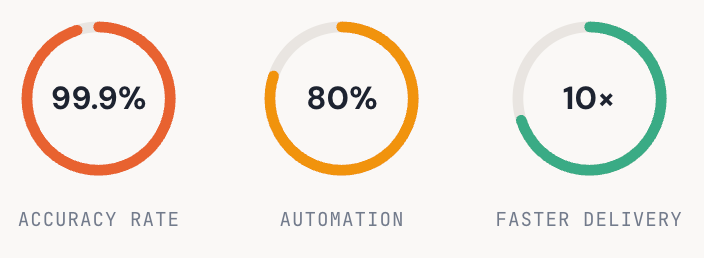
The zero-to-one story was predictably unglamorous. The seed investor became a customer. A handful of early believers took a chance. “Until probably five billion, it was still very uphill,” Chris admitted. “Very challenging. So much embedded trust, LP institutional complexity.” The breakthrough wasn’t a single moment—it was a compound of relentless customer obsession. The three elements of a raving fan, as Chris defines them: incredible onboarding, 99.9% accurate and fast delivery, and jaw-dropping AI-native product experiences. “I don’t think you can survive on two without three.”
“I’d rather you not become a customer than become an unhappy customer in four months.”
— Chris Hladczuk
The hardest part is saying no.
Hanover Park doesn’t take funds under $100 million. Chris is turning away customers “left and right” who aren’t the right fit. This is counterintuitive for a company in growth mode—most startups would take every dollar they can get—but Chris sees customer selection as an existential discipline.
Nic compared it to the CISO problem: “When you’re doing your job really well, I probably don’t think about you that much. When you’re doing your job poorly, I hate you passionately.” Chris agreed, extending the metaphor: “It’s like offensive line in football. No one cares about you until someone gets sacked.”
His North Star isn’t NPS. It’s whether every single customer would enthusiastically refer Hanover Park—what he calls a “raving fan.” “That’s insanely hard in our space, by the way. Making sure someone’s a raving fan is very challenging. That’s why I’ve been super disciplined.” Where a typical vertical software company might optimize for volume—sell it a million times, have a million customers—Chris is optimizing for love. It’s a different game entirely.
Live in healthy fear.
When Nic asked about switching costs—a topic they’d explored in previous episodes—Chris reached for Jeff Bezos: “I live in constant fear of my customers. I literally told our team, I don’t even care if we never get another sale. I just want every customer to be a raving fan.”
It’s not entirely exaggeration. Hanover Park has 10,000 LPs on its platform today, including major institutions. The LP portal creates lock-in—are you going to tell Harvard’s endowment they need to create a new login next month? But Chris doesn’t lean on that as defensibility. He assumes his customers can leave instantly and builds as if they might.
Luke asked if he’d felt any churn impact from Claude Code and similar tools. “No,” Chris said, but not because he’s complacent. “It’s different. It’s software plus services plus output plus accounting delivery. There’s a lot there.” What excites him more is the offensive potential: if AI can supercharge migration—taking twenty years of terribly-kept complex financial data and moving it cleanly to a new system—then the constraint on growth isn’t sales anymore. It’s physics.
“Assume my customer can leave me instantly. Then build something so good they never want to.”
— Chris Hladczuk
Own the ledger.
Every smart investor told Chris not to build a general ledger from scratch for the most complex fund accounting in the world. “You’re an idiot. Don’t do this. You’re dumb.” He did it anyway.
His reasoning comes down to a single insight: AI agents are just clicking buttons on top of the ERP. If the ERP can’t handle the core action, it doesn’t matter how smart the agent is. Without a foundational general ledger built from scratch, “you’re just a UI on top of somebody else’s system.” He’s dismissive of competitors who white-label another ERP and layer AI on top. “I don’t think that works.”
Chris acknowledged the tension with Brett Taylor’s thinking at Sierra—the idea that agents can talk to any system of record, making the system itself less important. “He’s a thousand times better of an operator than I am. So what do I know?” But he’s not ready to concede the point. In his industry, the ERP isn’t just a database—it’s the source of truth that makes every other product in the bundle better. Lose that, and you lose the data advantage that separates Hanover Park from every other standalone tool.
Key milestones.
Sep 2024
“B2B SaaS is dead” thesis
Chris goes on Turner Novak’s podcast. Everyone says he’s wrong.
Q4 2024
Rapid onboarding begins
First wave of enterprise fund admin clients migrated.
Early 2025
$27M Series A
Led by Emergence Capital. Team scales to elite CPAs + AI engineers.
Mid 2025
$15B AUM milestone
10,000+ LPs on platform. From one to fifteen billion in 12 months.
Next
One-click migration
Long-running AI agents to process decades of complex financial data.
Looking Ahead. Achieving “One-click migration.”
When Nic asked his final rapid-fire question—what’s the biggest limitation of AI for your business, and what would you change overnight?—Chris didn’t hesitate: long-running, long-horizon agents.
The context is specific. Migration is the single biggest constraint on Hanover Park’s growth. Chris frames it the way Elon Musk frames manufacturing bottlenecks: what is the limiting factor in the business? “If I could click one button and migrate, we would not have 15 billion. We’d have a hundred billion.” The challenge is that you’re asking an AI to take twenty years of complex, poorly-maintained financial data from legacy systems and produce a clean, accurate migration. No one has cracked this yet.
But Chris is betting on a three-to-six month horizon. The frontier of long-running agents—systems that can process complex data over hours or days, maintaining context and accuracy—could fundamentally change the unit economics of customer acquisition. “I’ve been saying this for literally a year. My team laughs at me. But I’m building a one-click migration future.”
If he’s right, the fund admin industry won’t just be disrupted. It’ll be compressed. Decades of accumulated switching costs evaporated by an agent that can run for a week and come back with a clean general ledger. It’s not science fiction. It’s a roadmap.
“Take all the most complex financial data in the world, come back to me a week later. That as an idea is the frontier.”
— Chris Hladczuk
For Founders: The canvassing playbook.
Nic asked Chris what advice he’d give to a new founder thinking about entering a category dominated by a legacy services provider. Chris’s answer was refreshingly unscalable: “The only antidote is the first hundred days of the company. Obsessively talking to unlimited people in the ecosystem. There is no antidote to talking to a thousand CFOs.”
He broke his process into three layers of canvassing. First, customer canvassing: stress-testing every assumption about the market by talking to hundreds of buyers. Second, failure canvassing: talking to people who tried something similar and understanding why it didn’t work. Third, competitive canvassing: mapping every player, their strengths, their gaps, and where you can build something more compelling.
“I had 65 pages on every single competitor, every single thing they had, every single thing I thought I could do differently,” Chris said. “That’s what got me to conviction. Just like an investor. But I only have one thing to work on for twenty years.”
What Chris believes.
Don’t say AI.
The worst pitch to a CFO is ‘trust me, it’s AI.’ Chris rarely uses the word with customers. The product speaks through outcomes, not buzzwords.
Own the ERP.
Without a foundational general ledger built from scratch, you’re just a UI on top of someone else’s system. Every smart investor said don’t. Chris did it anyway.
Customer selection is survival.
Mid-market and enterprise only. No sub-$100M funds. Turning away wrong-fit customers is a feature, not a weakness.
Raving fans over growth.
North star isn’t NPS. It’s whether every single customer would enthusiastically refer you. ‘That’s insanely hard in our space, by the way.’
Services aren’t a dirty word.
AI-native services is the disruption. Software companies won’t easily become services companies—the cultural DNA is too different.
Live in healthy fear.
Assume your customer can leave instantly. Build something so good they never want to. ‘I don’t even care if we never get another sale.’
Always get on the plane.
If a CFO texts with a concern, call immediately. Book a flight. Be in their office tomorrow morning. Four hours locked in a room until it’s sorted.
High ego for vision, low ego for execution.
‘You have to have some sort of ego to think we can build something that big, but low ego in terms of day-to-day execution.’
The Takeaway
Nic closed the episode by telling Chris he was sold. Luke asked if he’d gotten the deal. Chris laughed: “I show you the product and it’s over. I don’t know why we haven’t even gotten there yet.”
That line captures something essential about Hanover Park and about Chris as a founder. He spent an hour talking about trust, culture, obsessive customer service, sleeping in offices, and flying across the country at midnight—and never once showed the product. Because the product isn’t the pitch. The pitch is: we will care about your fund more than anyone else in the world, and we’ll have the AI infrastructure to prove it.
In an industry where the old guard calls engineering “IT” and calls their platform “a system,” Hanover Park is building something that feels inevitable in retrospect but impossible in the moment. Fifteen billion in twelve months suggests it’s working. The hundred-billion target suggests it’s just getting started.
Have a product or service that would be great for our audience of vertical SaaS founders/operators/investors? Reply to this email or shoot us a note at ls@lukesophinos.com