

Today’s newsletter is sponsored by Xplor Pay. More than a traditional processor, Xplor Pay was built by vertical SaaS operators who understand what it takes to launch, support, and scale embedded payments.

In their latest guide (click above to acess), What to Look for in a Payments Partner, they share practical lessons SaaS founders should use when evaluating payments, from production-like testing and portfolio visibility to proactive support and go-to-market alignment.
Alright, let’s get to it…

MagicSchool: AI For K-12
MagicSchool just closed a $45 million Series B led by Valor Equity Partners, bringing their total funding to over $62 million in less than two years.
For those keeping score at home: that’s a $2.4M seed in August 2023, a $15M Series A in July 2024, and now a $45M Series B in February 2025.
The numbers are absolutely bonkers:
4+ million educators have signed up for MagicSchool
Used in nearly every U.S. school district
Active in 160 countries worldwide
Partnered with over 10,000 schools
Teachers save an average of 7-10 hours per week using the platform
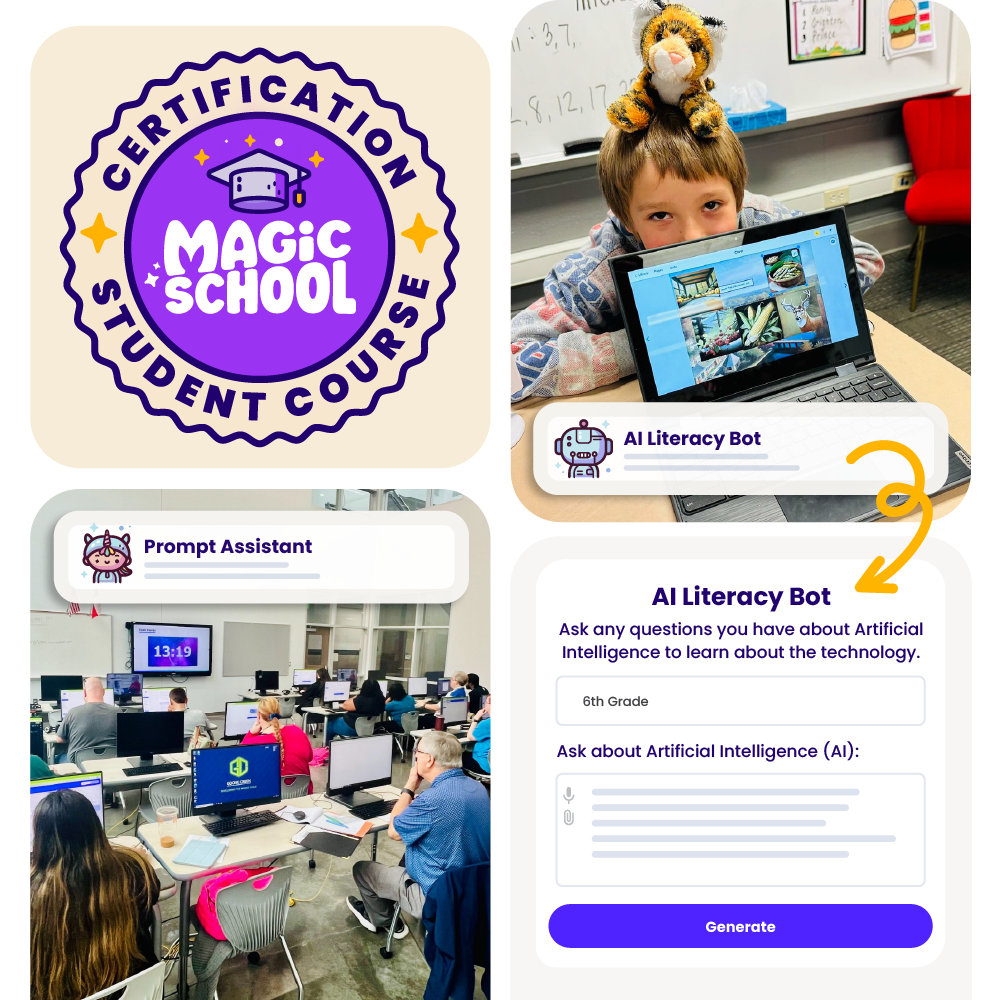
Let me break down why this is one of the most interesting vSaaS stories I’ve seen in education.
The Wedge Product: Teacher Burnout
Adeel Khan, the founder and CEO, is a former principal who saw the problem firsthand. Teachers are drowning. They’re spending nights and weekends creating lesson plans, grading assignments, writing IEPs, differentiating instruction for 30+ students with wildly different learning needs.
MagicSchool’s initial wedge? AI tools that reduce teacher burnout.
Not “AI for the sake of AI.” Not “ChatGPT wrapper #47.”
Real, practical tools built specifically for K-12 educators:
Lesson plan generators that understand state standards
IEP writing assistants that know IDEA compliance requirements
Assignment rubric creators that save hours
Parent communication templates that actually sound human
Differentiation tools that adapt content for different reading levels
The Business Model: Freemium SaaS with District Expansion
Here’s where it gets interesting from a business model perspective.
MagicSchool uses a three-tier freemium model:
Free tier - Generous enough that 4 million teachers signed up organically
Plus tier - Individual teacher subscriptions ($99-199/year estimated)
School/District tier - Enterprise contracts with compliance, SSO, data privacy
The genius move? They let teachers fall in love with the product for free, then those teachers become internal champions who demand their districts buy licenses for everyone.
This is the wedge-to-platform playbook executed perfectly.
You start by solving one painful problem (teacher burnout), get organic adoption, then expand into the broader school/district needs:
Student-facing AI tools (launched in 2024, hundreds of thousands of students in first month)
Data analysis tools for administrators
Compliance and safety features that districts require
MagicSchool Labs for developing new AI capabilities
The TAM Play: K-12 Education
The U.S. K-12 education market is $810 billion annually.
But here’s what makes this vertical so compelling:
1. Every school needs this - Unlike vertical SaaS for, say, marinas or funeral homes, there are 130,000+ K-12 schools in the U.S. alone. The market size is actually comparable to many horizontal SaaS categories.
2. Sticky as hell - Once teachers integrate MagicSchool into their daily workflows, and once districts invest in training and implementation, switching costs become astronomical.
3. Recurring budget lines - Schools budget for software annually. Once you’re in the budget, you’re in the budget. Districts don’t rip out tools that teachers depend on.
4. Expansion opportunities - You can sell additional products: curriculum libraries, professional development, assessment tools, parent communication platforms.
The Moat: Domain Expertise > Generic AI
Here’s what keeps me up at night about this business.
Every big tech company will build AI for education. It’s broad enough and impactful enough. Google, Microsoft, OpenAI—they’re all going to come after this market.
But here’s why MagicSchool can win:
Generic AI doesn’t understand:
FERPA compliance requirements
State-specific academic standards
IEP legal frameworks
Differentiated instruction methodologies
Classroom management best practices
Age-appropriate content guardrails
MagicSchool has spent two years building AI that speaks the language of educators. That domain expertise is nearly impossible to replicate quickly.
When a teacher asks MagicSchool to “create a lesson plan for 5th grade fractions aligned to Common Core standard 5.NF.A.1 with scaffolding for ELL students,” the AI knows exactly what that means.
When a teacher asks ChatGPT the same question? Good luck.
The Concerns (Because I’ve Got the Battle Scars in Education to Ask Hard Questions)
1. School budgets are notoriously tight - How much pricing power do they really have? My guess is they’re charging $10-20/teacher/year at the district level. That’s incredibly low ACV compared to most vSaaS businesses. They’ll need massive scale or need to expand into higher-value products.
2. The AI platform risk is real - MagicSchool is broad enough that we are very likely going to see the big model companies go after them. If OpenAI, Google, or Microsoft decide to give away education-specific AI tools for free, MagicSchool could face serious headwinds. Their defense is domain expertise and trust, but that’s not an infinite moat.
3. Teacher adoption ≠ district revenue - 4 million teacher signups is impressive, but how many are paying? How many districts have enterprise contracts? The conversion funnel from free user to paid district contract is the real business.
4. Public school sales cycles - Selling to districts means navigating bureaucracy, procurement processes, and committee decisions. That’s a grind. It’s also why they need $45M—to build the sales team that can navigate that complexity.
The Takeaway
MagicSchool is doing what every vertical SaaS founder should aspire to do:
Identify a massive pain point in a specific vertical (teacher burnout)
Build a wedge product that solves it better than generic alternatives
Get organic adoption through product-led growth (4M teachers don’t lie)
Expand into the full platform that the organization needs (district features, student tools, admin dashboards)
Build domain expertise moats that horizontal competitors can’t easily replicate
The $45M bet from Valor and Bain Capital isn’t on AI. It’s on vertical AI—AI that’s purpose-built for a specific industry with deep domain expertise baked in.
That’s the future of vSaaS.
I’m going to have the Founder & CEO of MagicShool on the pod in a few weeks. Subscribe to our YouTube channel here to be notified when it drops.

If you’ve been reading this newsletter, you know I’m obsessed with helping vertical SaaS founders, operators, and investors win.
But here’s the problem:
Most startup resources are built for traditional and mostly horizontal SaaS.
The playbooks you read? Written for selling to “SMBs” or “enterprises” with generic CRM workflows.
The advice you get from advisors? Optimized for PLG, bottoms-up adoption, and land-and-expand motions that don’t work in most verticals.
The advice that works for horizontal SaaS doesn’t work for vertical SaaS.
GTM motions are different - You’re not doing PLG with bottoms-up adoption. You’re doing top-down enterprise sales into fragmented verticals.
Investor requirements are different - VCs look at your TAM differently when you say “I’m building for funeral homes” vs. “I’m building for all businesses.”
Customer Success is different - Your customers need domain expertise, not just product training.
Unit economics are different - You’re monetizing through payments, fintech, and services—not just SaaS subscriptions.
Competitive moats are different - You win through regulatory compliance and workflow depth, not virality and network effects.
So I made everything 100% free/ungated over to VerticalSaaSGroup.com

1. Content Hub
Case studies of successful vertical SaaS companies (Toast, Veeva, ServiceTitan, Procore)
Playbooks for GTM, pricing, fundraising, product development specific to vSaaS
Breakdowns of vertical SaaS business models, unit economics, and strategies
Market maps of promising vertical opportunities
Operator interviews with founders who’ve built and scaled vertical SaaS businesses
2. Community
VSG is where vertical SaaS operators actually hang out.
Who’s in the community?
Founders building vSaaS companies from $0 to $1B of ARR
Operators running GTM, product, and customer success at vertical SaaS companies
Investors who specialize in vertical software (VCs, growth equity, PE)
Service providers who work exclusively with vSaaS companies
3. Catalyst / Network
VSG connects vertical SaaS companies with the resources they need:
Annual Conference - We have relationships with the top vSaaS investors
Monthly Virtual Workshops (Coming soon!) - 60 minute intensive workshops with leading CXO’s.
Check it out and let me know what you think :-)
Do Your Homework On Investors & Acquirers
Most will read the title of this section and skip right over it. I heard this same advice SO MANY times and just said:
“Eh it’s fine, that won’t ever happen to me.”
But I want to share a story I recently heard in an effort to beg each and everyone of you to do your homework on anyone that invests in or buys your company. It’s so easy to get blinders and think short term but do yourself a favor and read this through to avoid a lot of serious pain and misery…
A War Story
I spent a few hours recently with an entrepreneur who has sold a few companies. He shared a war story on his first exit that was so painful I couldn’t help but feel bad/angry/sad/all the emotions for him.
He had a good business, nothing crazy, but too early for PE. He received an offer for 50% up-front, 50% after one year — a high six figure purchase price. Classic golden handcuffs structure.
He spent a lot of time with the buyer, related to him on a personal level, the guy checked all the boxes as just a “good dude”.
The Nightmare Begins
So he proceeds with the deal, he gets his 50% up-front and then 12 months later the buyer comes back and says:
“I think you misrepresented the business so I’m not going to be paying you the remaining amount.”
This entrepreneur is buttoned up, his financials are accurate, he hit his numbers while he waited out his golden handcuffs. What it comes down to is frankly this was just total BS.
The Trap
Eventually, after a lot of proving that was a completely garbage statement by the buyer, the acquirer eventually just tells him:
“Look, I am not going to pay you the remaining 50%. There are two options here. You can sue me, and spend just as much as the initial tranche of capital you received defending the case, or you can move on and deal with it.”
So the founder does some digging and finds that this guy is an active party in 10+ lawsuits of this exact nature. He basically runs this playbook for a living. He’s a former lawyer, has 5 full-time lawyers on his payroll.
This is legitimately his business model.
It Happens More Than You Think
This is an extreme example, but the unfortunate truth is people like this exist in the world.
I have not personally had an example this extreme, but I have had horrendous investors who invested so little and anytime the business wasn’t performing to their expectation became litigious.
In my experience, this type of behavior almost ALWAYS comes from non-founders or folks unfamiliar with start-ups. Think lawyers/doctors/etc.
Founders get how hard this game is, and as long as you tried your best and were honest they will have your back no matter what. Unfortunately that is just not the case for a lot of folks.
The Moral Of The Story
Please be so careful when raising capital or selling your business.
Do your homework:
Don’t call the references they provide you
Call the folks they don’t bring up / mention
Pay a service to research lawsuits that they have been party to
It’s so so important.
Have a product or service that would be great for our audience of vertical SaaS founders/operators/investors? Reply to this email or shoot us a note at ls@lukesophinos.com